Operations | Monitoring | ITSM | DevOps | Cloud

The latest News and Information on Monitoring for Websites, Applications, APIs, Infrastructure, and other technologies.

Metricbeat vs. Telegraf: Side-by-Side Comparison

Responsible for collecting various system and service metrics and forwarding them downstream to a backend storage system, the role metric collectors play in monitoring pipelines is crucial. Despite this fact, they often get left in the shadows cast by the beautiful frontend analysis tools like Kibana or Grafana. In the world of open source monitoring stacks, Metricbeat and Telegraf stand out as the most popular metric collectors. The truth is that they do much more than simply collect metrics.

SolarWinds Lab Episode #77: Orion Maps 2.0, New Alerting, and Palo Alto Networks Monitoring

In this episode of SolarWinds Lab, the team breaks down one of our largest, multi-product feature releases to date. Between the new Orion Maps 2.0 engine, reboot of the status engine for roll ups and alert filtering, and the reveal of the #1 THWACK member-requested Network Insight for Palo Alto module for Network Performance Monitor – we know you’ll have plenty of questions.

How to Troubleshoot Java CPU Usage Issues

If you have deployed a Java application in production, you’ve probably encountered a situation where the application suddenly starts to take up a large amount of CPU. When this happens, application response becomes sluggish and users begin to complain about slow response. Often the solution to this problem is to restart the application and, lo and behold, the problem goes away – only to reappear a few days later.

How to improve AWS Lambda Cold Start performance

One of the great promises of serverless has always been that it would free developers to focus on writing code without having to give too much consideration to the underlying infrastructure. But the advantages presented by the instantly, infinitely scalable nature of serverless come with limitations and unique considerations that you need to take into account.

DevOps Monitoring, Development, Security and Operations: DevSecOpsMon

In the 20th century we were programmers. In the 21st century, developers. With the massification of telecommunications worldwide, operators began to help us in our work. That’s where the term DevOps (“developers” and “operations”) arose, which implies the concept of collaboration of both teams. But since change is the only constant, other practical considerations have forced us to see the entire forest instead of just a few trees.

State of Lambda functions in 2019 by Dashbird

Ever wondered what’s under the hood of your neighbors’ car, the situation in their wallet or the configuration of their serverless stack? Well wonder no more! Today we will bring you the statistics of Dashbird so you could compare your Lambda functions with others. Unfortunately, the car and the wallet thingy you should figure out on your own. Let’s start… (I hope you like charts)

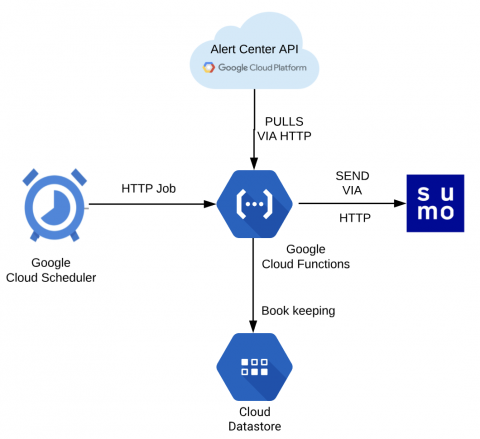
Sumo Logic provides real-time visibility, investigation and response of G Suite Alerts

G Suite is Google’s integrated suite of secure, cloud-native collaboration and productivity apps. Some of the most popular apps from the suite are Gmail, Docs, Calendar, and Drive. Currently, Sumo Logic has a successful integration with G Suite: the Sumo Logic app for G Suite that monitors usage, administrator activity, and logins, and is used by over a hundred customers across various parts of the globe.

How Does Ruby Garbage Collection Work? A Simple Tutorial

Ruby, like most other modern, high-level programming languages, doesn’t force you to manage memory. This feature is called garbage collection, or GC, and you get it for free in Ruby. You can write tons of Ruby code and never give a second thought to the fact that under the covers, Ruby is doing a bang-up job of allocating and freeing memory for your code to use. But it certainly couldn’t hurt to learn something about how Ruby garbage collection works.

Five Ways To Accurately Measure Employee Experience Success

Even though it’s early, my discussions these first few months of the year tell me that “employee experience” is becoming one of the buzzwords of 2019. The CEOs and CTOs I’ve spoken with at companies of all types and sizes are talking about the need to provide a world-class workplace experience for their employees (and what that actually means).