Operations | Monitoring | ITSM | DevOps | Cloud

The latest News and Information on Observabilty for complex systems and related technologies.

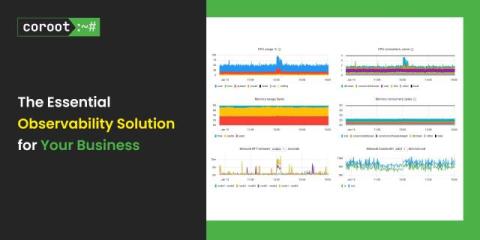
Prometheus vs InfluxDB [Detailed Technical Comparison for 2024]

Prometheus and InfluxDB represent two distinct approaches to time-series data management and system monitoring. As organizations grapple with increasing data volumes and complex infrastructures, choosing the right tool becomes crucial. This analysis dives deep into the technical nuances of Prometheus and InfluxDB, examining their architectures, data models, and performance characteristics.

How Australian local governments can use cloud-native observability

Australian city councils are the command centers of every city, ensuring essential services are delivered with reliability and speed while being available for citizens' queries and requests. Though the IT infrastructure of Australian city councils has predominantly been on-premises, the last decade has seen a substantial digital shift with increasing cloud adoption.

Grafana vs Prometheus [Detailed Technical Comparison for 2024]

Grafana and Prometheus have become integral components in observability stacks. This comprehensive analysis examines Grafana and Prometheus, two leading open-source tools that address critical aspects of system observability. We'll dissect their architectures, compare key features, and evaluate their performance in various deployment scenarios.

Mastering Kubernetes Logging - Detailed Guide to kubectl logs

Effective logging is crucial for maintaining and troubleshooting applications running in Kubernetes clusters. As applications become more complex, ensuring they perform optimally has never been more critical. In this comprehensive guide, we'll explore Kubernetes logging using kubectl, covering everything from basic commands to advanced techniques and best practices.

Introduction to Splunk Synthetic Monitoring in Splunk Observability Cloud

In this video I’m going to introduce you to Splunk Synthetic Monitoring in Splunk Observability Cloud. I’ll explain what synthetic monitoring is and then demonstrate a simple example by creating a browser test for a sample e-commerce site. I’ll also demonstrate how you can link issues found through synthetic monitoring with backend code due to its integration with Splunk APM.

Best Practices for Using JIT Access as Part of Developer Observability

JIT Access, sometimes referred to as just-in-time provisioning or just-in-time privileged access management (JIT PAM), is a security strategy that grants users access privileges for limited time periods. Access is granted on an “as-needed” basis. For example, if a developer requires access to a specific platform for a week or as part of an on-call access to production duty, a JIT Access system can provide that access and automatically revoke it after the time period ends.

Gain actionable insights with real user monitoring: the latest features in Grafana Cloud Frontend Observability

One of the biggest challenges observability teams face today is gaining end-to-end visibility into their cloud native apps, including modern browser frontends. Without that visibility, you potentially open the door to bad end-user experiences that can hurt customer satisfaction, reduce search engine discoverability, and interfere with overall business goals. This is the exact challenge we address with Grafana Cloud Frontend Observability.