Operations | Monitoring | ITSM | DevOps | Cloud

The latest News and Information on Observabilty for complex systems and related technologies.

Observability Without Limits - Uptrace Pricing Explained

Welcome to Uptrace, the modern observability platform. Our pricing is simple: pay only for the data you ingest. Unlimited users, services, and hosts Billed per uncompressed GB for spans & logs Billed by active timeseries for metrics Automatic volume discounts as your usage grows Free trial includes 1 TB of spans & logs and 100,000 timeseries — no credit card required.

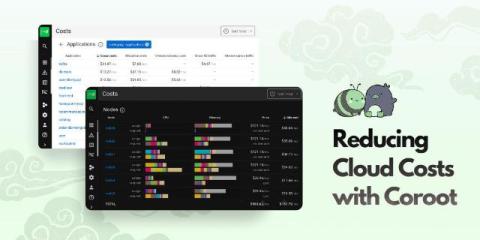
Tech Talk - Aligning Observability Costs with Business Value Practical Strategies

Learn how to tackle the challenges of growing telemetry data and optimize your observability model to maximize value while minimizing costs. This session will explore strategies to reduce log ingestion, centralize pipeline management, and gain visibility into metric usage to identify waste.

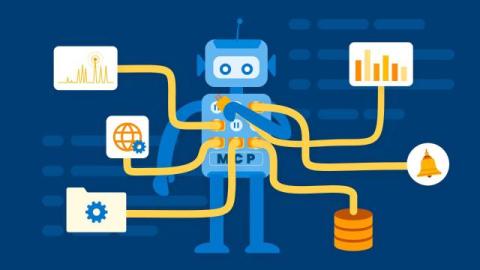
Full-Circle Observability: Using SigNoz to monitor a LangChain agent that queries SigNoz MCP

In Part 1 of this series, we explored how to instrument a LangChain trip planner agent with OpenTelemetry and send telemetry data to SigNoz. By tracing each step of the planning process: LLM reasoning, tool calls for flights, hotels, weather, and activities, and the final itinerary response, we saw how observability turns a black-box agent workflow into a transparent, debuggable system.

LangChain Observability: How to Monitor LLM Apps with OpenTelemetry (With Demo App)

LangChain has become one of the most popular frameworks for building LLM-powered applications, making it easier to create agents that can reason, plan, and take actions. But like any production-grade AI app, LangChain agents can run into performance bottlenecks, hallucinations, or tool call failures. And without proper LangChain observability, it’s hard to know where things break down.

EP #2: Valkey, Vector, Redis, and the History of Databases - The Open Source Observability Podcast

In this episode we learn how Valkey, the lightning-speed open source key-value datastore, can help improve your observability toolstack. Dive in to learn what differentiates a NoSQL data store from a relational database, more about data structures such as HyperLogLog and Bloom Filter, and all about the history of how data is stored.

Evaluate and Improve Your Site's Web Performance With Honeycomb for Frontend Observability

As an engineer on Honeycomb’s frontend platform team, I’m constantly trying to understand and improve our web performance. And I have a whole lot of questions. I tried answering these types of questions without Honeycomb in the past, and it was difficult and time consuming. It used to take me days to identify performance issues and their causes, let alone fix them and confirm that they improved web performance for some subset of users.

Raising the bar in observability and security: Coralogix extensions at scale

In today’s high-velocity digital ecosystem, visibility isn’t enough. SREs and engineering leaders need real-time insights, actionable signals, and automated workflows to operate at scale. As systems grow more distributed and cloud-native, the demand for intelligent observability and security has never been higher. Extensions are solutions to get instant observability with prepackaged parsing rules, alerts,dashboards and more.

How Product Managers Can Benefit From Honeycomb

Observability tools like Honeycomb are built for engineers, not PM teams… but that doesn’t mean there’s no benefit to having your PMs in Honeycomb. Whether it’s debugging a weird customer issue or tracking how a feature is used in the wild, observability gives PMs something traditional product tools can’t: real-time answers with full context, down to a single user.

Proactive Observability - Predictive Analytics Models and Algorithms for IT Systems and Metrics

Predictive Analytics Models and Algorithms are an important component of eG Enterprise’s AIOps engine for proactive observability. eG Enterprise collects and analyses metrics, events, logs and traces and the data including real usage data is used to make intelligent predictions to forecast future system behavior and IT resource metric levels.