The latest News and Information on CyberSecurity for Applications, Services and Infrastructure, and related technologies.
The Australian Cyber Security Centre (ACSC) recently published an advisory outlining tactics, techniques and procedures (TTPs) used against multiple Australian businesses in a recent campaign by a state-based actor. The campaign — dubbed ‘copy-paste compromises’ because of its heavy use of open source proof of concept exploits — was first reported on the 18th of June 2020, receiving national attention in Australia.
SIEM (Security Information and Event Management) is a kind of software whose purpose is to provide organizations and corporations with useful information. “About what?” you may wonder. Well, about potential security threats related to your business networks. SIEM does this through data collation and by prioritizing all kinds of dangers or threats. In general, we already answered the question “what is SIEM?”, but how does it do it?
You may be surprised to learn that a particular malware is responsible for data theft in over 20% of financial institutions and other verticals in 2019. Watering hole attacks involve a web server that hosts files or applications where the website or files on the site become weaponized with malware. While recent news cycles have shined a spotlight on ransomware and crimeware, malware is not a new concept.
Secure Sockets Layer, or SSL, is a global security standard technology that is being adopted by a number of different organizations across the globe. Essentially, SSLs are small data files containing a cryptographic key. This key carries important information about the organization using it. Around 600,000 websites have installed SSL certificates for security.
VPNs and Remote Desktop Gateways are two different tools used to achieve similar goals. That is: access content or software remotely and securely, and improve the overall freedom of the user – whether that’s from prying eyes or the need to have physical access to their business network. But while each option can be attractive, neither is without its security concerns.
Monitoring — by its very nature — requires privileged access to internal and external services. In order to safely maintain visibility into critical systems, it’s vital to have some form of secrets management to manage authentication credentials (AKA, "secrets"), including passwords, keys, APIs, tokens, and any other sensitive pieces of information in your IT infrastructure.
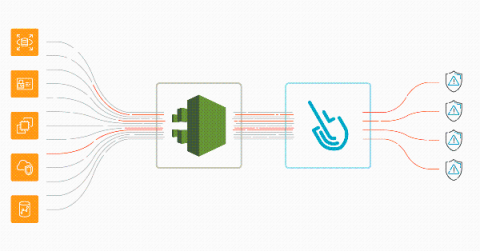
Cloud environments like AWS can be a challenge for security monitoring services to operate in since assets tend to dynamically appear and disappear. Making matters more challenging, some asset identifiers that are stable in traditional IT environments like IP addresses are less reliable due to their transient behavior in a cloud service like AWS. Amazon GuardDuty protects your AWS environment with intelligent threat detection and continuous monitoring.