Operations | Monitoring | ITSM | DevOps | Cloud

The latest News and Information on CyberSecurity for Applications, Services and Infrastructure, and related technologies.

Getting started with adding a new security data source in your Elastic SIEM: Part 1

What I love about our free and open Elastic SIEM is how easy it is to add new data sources. I’ve learned how to do this firsthand, and thought it’d be helpful to share my experience getting started. Last October, I joined Elastic Security when Elastic and Endgame combined forces. Working with our awesome security community, I’ve had the opportunity to add new data sources for our users to complement our growing catalog of integrations.

Maze Ransomware Attack Hits Cognizant

New Jersey-based service provider Cognizant is the latest victim of the Maze ransomware attack. This is an unfortunate reality check, proving that hackers don’t stop their calculated, malicious activities for COVID-19. Accordingly, managed service providers (MSPs) are still largely vulnerable to these malicious crimes.

Security Log Monitoring and DNS Request Analysis

Monitoring all DNS requests in your network, including those that were blocked by (e.g., by a firewall) is a great way to increase visibility, enforce compliance and detect threats. A common problem with collecting DNS logs is that DNS server logs are notoriously hard to parse. Also, parsing only the logs of your DNS servers leaves a blind spot when it comes to usage of, or the attempt to use, an external DNS server like Google's 8.8.8.8.

Splunk Attack Range Now With Caldera and Kali Linux

The Splunk Security Research Team has been working on new improvements and additions to the Splunk Attack Range, a tool that allows security researchers and analysts to quickly deploy environments locally and in the cloud in order to replicate attacks based on attack simulation engines. This deployment attempts to replicate environments at scale, including Windows, workstation/server, domain controller, Kali Linux, Splunk server and Splunk Phantom server.

7 Ways To Tell If Your Website Has Been Hacked

In this day in age, businesses rely heavily upon their website as a means of driving sales and reaching customers. It is usually the first point of contact between a potential customer and the business, and thus, it commands a level of investment. Because of this, it can be frustrating and upsetting to have one’s web page hacked and rendered useless.

How to Implement Network Policy in Google GKE to Secure Your Cluster

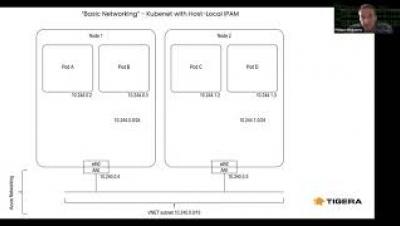
By default, pods are non-isolated; they accept traffic from any source. The Google GKE solution to this security concern is Network Security Policy that lets developers control network access to their services. Google GKE comes configured with Network Security Policy using Project Calico which can be used to secure your clusters. This class will describe a few use cases for network security policy and a live demo implementing each use case.

How to deploy an app to AWS: App security

AWS security is an ongoing battle that you must address during every release, every change, and every CVE. When you’re first launching your production application, it’s impossible to check all the boxes; you simply don’t have the time. Until your application gets more adoption, you only have the time to do the bare essentials of security.

Getting up and running with Calico Host Micro segmentation Protection on AWS

In this online training, we will explain how to install and configure Calico on a vm/host to apply network policy to resources outside your K8s cluster. The talk will be primarily a walkthrough and demo and you will receive all manifests and instructions to do the demo on your own after the session.