Patch management is a term that’s familiar to all within the depths and boundaries of endpoint security. While the addition of “automation” to this term might make it seem like one among the thousands of other automated tasks, cybersecurity experts have been going gung ho over it in the last few years. If you’re reading this, it probably doesn’t make sense to explain to you what patch management automation or automated patch management is.
What is the difference between logs and events in observability? These two telemetry data types are used for different purposes when it comes to exploring your applications and how your users interact with them. Simply put, logs can be used for troubleshooting and root cause analysis, while events can be used to gain deeper application insights via product analytics. Let's review some application telemetry data definitions for context, then dive into the key differences between logs and events and their use cases. Knowing more about these telemetry data types can help you more effectively use them in your observability strategy.
To understand why Graphite metrics delay occurs, we must first know what Graphite is. Graphite is an open-source tool used to track the performance of websites, applications, and network servers. It makes it simple to monitor, store, retrieve, and visualize numeric time-series data. While Graphite does make it easier to render graphs on-demand, the struggle of dealing with large amounts of data with minimum delay is real.
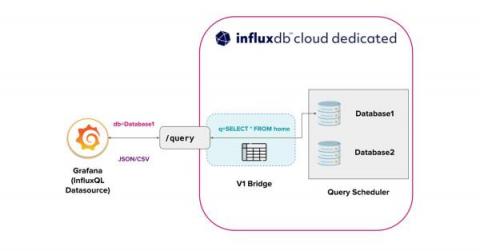
If we turn the clocks back to September 2013, we released InfluxQL alongside InfluxDB. InfluxQL is a SQL-like query language, specifically designed to query time series data. For many of our users, InfluxQL still remains the primary way they interact with InfluxDB. Based on this feedback, InfluxQL has been reborn in InfluxDB 3.0 alongside native support for the SQL query language. So what do I mean by reborn?