The third and final chapter in our three part blog series. John Appleby sits down with Nick Miletich, CTO at Managecore, to discuss how building a next generation managed service firm had to include automation at the helm.
“Remote access makes everyone’s jobs easier,” MSP360 states. Thanks to remote access, organizations and their departments are able to collaborate and perform even with fully remote or hybrid workforces. In order for remote access to work properly, organizations connect their remote servers to endpoints using remote access protocols. Let’s dive into remote access protocols and find out how they are used in today’s tech environments.
Data is kind of like Newton’s first law of motion. Data is just that unless acted upon by something else. Time series data, therefore, is something you derive from data. We generally derive time series data to record historical observations about a physical or virtual system (for example, think of sensors and servers, respectively). However, not all time series data is the same. There are different use cases for time series data, and each has its own workload needs.
Azure Blob Storage is a cloud-based storage solution that enables developers to store and manage large amounts of unstructured data. Blob storage can store any type of text or binary data, such as documents, images, audio, and video files. Blobs are divided into three types: block blobs, append blobs, and page blobs. Each type of blob has its unique characteristics and is used for different purposes.
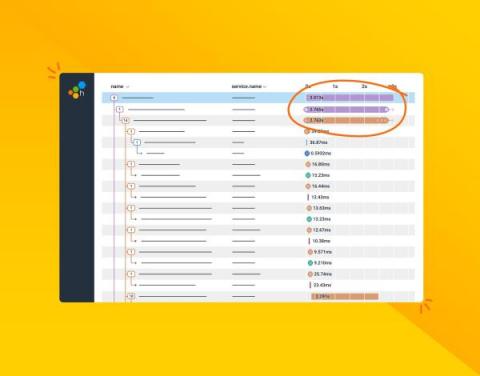
So you're used to debugging systems using a distributed trace, but your system is about to introduce a message queue—and that will work the same… right? Unfortunately, in a lot of implementations, this isn't the case. In this post, we'll talk about trace propagation (manual and OpenTelemetry), W3C tracing, and also where a trace might start and finish.