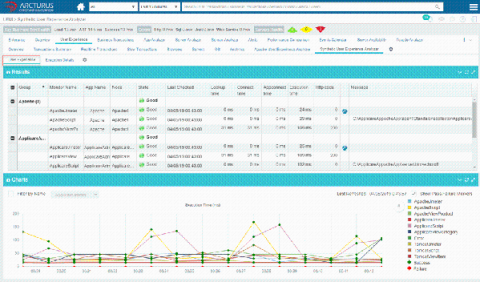
Synthetic Monitoring is referred to as an approach of testing a web service or a website by simulating the website visitors’ requests across various geographies in order to test its availability and performance. One can compare performance stats of different geographies and formulate performance improvement plans. Synthetic monitoring lets you find problems before your customers do leading to shorter MTTR.
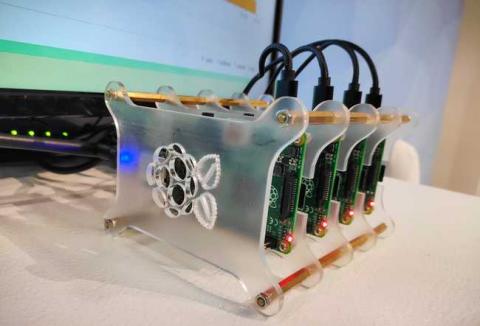
In order to carry out a demonstration of our smart tool: the Bleemeo agent at the 8th Devoxx France conference planned for the 17th of April, Bleemeo team decided to use the Kubernetes infrastructure and specially the lightweight version of Kubernetes: k3s. We choose to run k3s on a cluster of 3 Raspberry Pi nodes composed of 1 master node and 2 slaves nodes.
At Mattermost, we built an intuitive workplace messaging platform that all kinds of teams can use productively right away, regardless of technical prowess. That said, we understand that learning new platforms isn’t always the easiest thing in the world. Some Mattermost users will have longer learning curves than others, and that’s perfectly okay. We all march at different speeds.
Are you the type of person who wonders why things happen? When you were a child, did you look into the clouds when it rained and wonder what was the mechanism behind it? This is an intelligent attitude. We cannot go through life relying only on chance and our intuitions; sometimes it is convenient to ask ourselves about things before doing them, especially when it comes to making some important decisions.
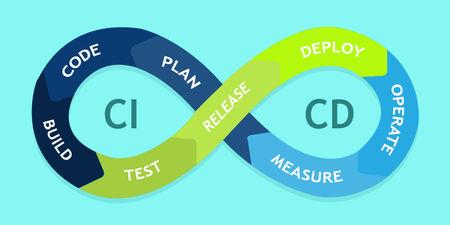
We’re on the verge of something here, people. A growing number of companies are shipping software in minutes. Yeah, you read that right. Minutes. Not hours, not weeks, months, or longer. Minutes. Often, teams struggle to ship software into the customer’s hands due to lack of consistency and excessive manual labor. Continuous integration (CI) and continuous delivery (CD) deliver software to a production environment with speed, safety, and reliability.
I spoke at Container World 2019 in Santa Clara and shared insights on what LogDNA has learned in scaling Elastic Search using Kubernetes over the years. Here are some highlights from the talk and you can also find the slide deck below.
PHP logs are not just about errors. You can use logs to track the performance of API calls and function calls, or to count the occurrence of significant events in your applications (e.g., logins, signups, and downloads). Whether you’re operating a microservices architecture or a monolith, implementing a comprehensive PHP logging strategy will allow you to track critical changes in your applications and optimize their performance.