Operations | Monitoring | ITSM | DevOps | Cloud

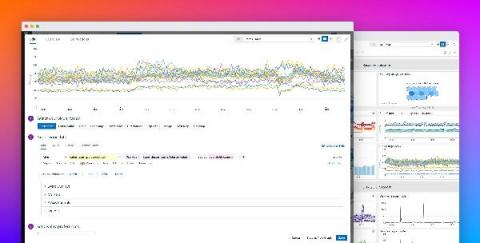
Debug application issues with APM and Network Performance Monitoring

With the advanced containerization that has become the norm in the modern cloud, your infrastructure is likely more distributed, and thus more exposed to networking issues, than ever before. When troubleshooting application performance issues, this can make it difficult to link the symptoms you observe through monitoring the “golden signals” (requests, latency, and errors) on individual endpoints in your application to their underlying root causes.

Accelerating Artifacts Distribution Across Repositories and Runtime Environments

When your remote offices around the world can’t get their hands on the most recent builds fast enough for continued testing, when your infrastructure nodes can’t download Bill-of-Materials (BOM) of 1,000s GBs in order to start a release deployment, or when your customers and developer ecosystem can’t download your recent drivers, plugins or OSS in a reliable manner -- productivity and release velocity suffer. Artifacts distribution across remote locations and hyper-scale hybrid environments has become increasingly more challenging in the last couple of years, due to recent trends in modern software delivery.

How to find traces in Tempo with Elasticsearch and Grafana

Grafana Tempo, the recently announced distributed tracing backend, relies on integrations with other data sources for trace discovery. Tempo’s job is to store massive amounts of traces, place them in object storage, and retrieve them by ID. Logs and other data sources allow users to quickly and more powerfully jump directly to traces than ever before. Previously we investigated discovering traces with Loki and exemplars.

Support for Database Performance Monitoring in Node

Performance monitoring is great because it lets you see whether your application is fast or slow, and which parts need speeding up. For Node developers, those “parts” are most often endpoints handling incoming requests. Since the introduction of our performance monitoring offering in July 2020, Node devs have been able to use the Sentry SDK, @sentry/node, to measure the total time it takes to process each request, but we made some significant improvements since then.

Kubernetes Namespaces: A Practical Guide

Kubernetes namespaces enable you to organize cluster objects, such as applications, devices and variables. Once you define namespaces, you can use this classification to filter, group and manage objects. You can use the same namespaces in duplicated environments and apply policies to specific clusters segments. Kubernetes namespaces are also important for defining roles and ensuring proper access configuration. If you're monitoring Kubernetes, you should try out MetricFire.

What do dog's pondering and "Observability" have in common?

Observability is arguably the tech buzzword of the year. Whether or not you believe the hype, observability is all about how to ensure overall system health and deliver reliable customer experiences. This is done by observing the system, and when a problem arises, using real-time analytics to quickly help identify the what, where, and why of the problem. In this video, Sumo Logic co-founder and CTO Christian Beedgen takes a closer look at: In addition, the video features a live demo of Sumo Logic’s end-to-end observability solution.

Achieve Business Objectives with Data Driven Observability - Webinar

Modern financial services company Snoop uses open banking and artificial intelligence (AI) to analyse customers’ transactions and spending. But as the volume, variety, and sensitivity of data it manages increases, so does the complexity. Watch this “fireside chat” style webinar to learn how to gain unified visibility across your Amazon Web Services (AWS) infrastructure. Listen as experts from Snoop, Sumo Logic, and AWS share tips and tools to help you glean game-changing insights in real time, economically, and at scale.