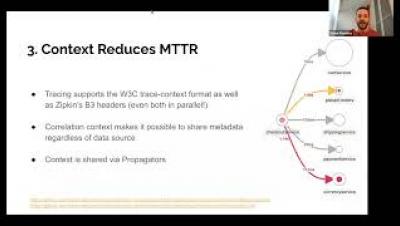
Systems and applications alike have become progressively distributed as microservices, open-source tools, and containerisation have gained traction. In order to actively monitor and respond quickly to issues that arise in our environment, distributed tracing has proven to be vital for businesses such as Uber, Postmates, Hello Fresh and TransferWise. It is, however, important to clarify what distributed tracing actually means.
Today’s blog post will give an insight into one of the many things that improved with Icinga DB: how host and service history is written to the database, both by the old IDO feature, as well as what has changed with Icinga DB and how this leads to more reliable results.
It’s difficult for even the most advanced security teams to stay on top of evolving incursions and ensure their processes effectively map to prevent them. That’s where pre-built templates come into the conversation. No-code, security automation templates can handle the considerable burden of having to maintain and update processes that integrate with a company’s security stack.
Today’s employees enter the workplace with a new expectation: they expect to use the technology they want to use. But can IT really manage a workplace where you can bring your own stack? Ten years ago, the concept of employee experience conjured images of well-decorated, comfortable offices, with ping pong tables and beer on tap. It’s a construct of employee engagement that now feels almost painfully out of touch.
All organizations aim to grow their business and reduce their other expenses such as operational costs, equipment maintenance cost, and so on. However, it is not an easy process as organizations have lots of assets. For this process organizations require assistance. This is where EAM comes into play. It is helpful in reducing expenses and helps in optimizing business activities. In this blog, we will know what EAM is and why organizations should invest in EAM solutions. So, let us begin!
This is part one of a two part blog series on open source based private cloud for financial services. This blog describes the need for a cost-effective private cloud to execute a successful hybrid cloud strategy. It also shares a comparison between proprietary and open source based private cloud platforms.
The cyberthreat landscape has expanded in recent years, accelerated by enterprises promoting remote work and more reliance on cloud computing. These are a business necessity, and yet, facing down cybersecurity threats often doesn’t come with an expansion of resources to address them. In a future post, I’ll discuss more about the Security Poverty Line, and how organizations deal with its harsh trade-offs and compromises in an uncompromising landscape.