Operations | Monitoring | ITSM | DevOps | Cloud

Announcing the GitKraken Suite

We’ve always been focused on creating tools that make development teams more productive. In 2014, we introduced GitKraken, the legendary cross-platform Git GUI: an intuitive tool to visualize what’s going on under the hood of Git in a way that makes version control less intimidating for individual developers and more scalable for organizations. Next came Glo Boards, a Kanban tool for project managers and developers.
InfluxDB Community Office Hours - June 2020

InfluxDB Community Office Hours are one-hour, monthly online sessions, held on the 3rd Wednesday of the month at 10:00 am Pacific Time, by our Influxers to answer your questions about any topic related to InfluxDB or time series. We host this monthly live webinar so that users can directly ask a panel of Influxers questions and talk in real time. We record these sessions and post them on YouTube. InfluxDB Community Office Hours are part of our commitment to open source, developer happiness, and time to awesome.

Why MSPs Choose OpsRamp for Hybrid IT Operations Management

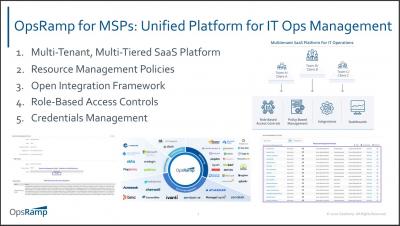
OpsRamp’s recent survey found that 91% of IT operations teams were looking to increase spending with managed service providers (MSPs). The major reasons for working with MSPs to monitor and manage hybrid infrastructure were technical expertise (63%), security know-how (52%), and cost optimization (50%). A modern IT operations management (ITOM) platform can help MSPs tame infrastructure complexity by monitoring legacy and modern environments, deliver the right operational context to better understand the impact of infrastructure on the health of IT services, use machine learning techniques to improve critical operational metrics, and handle customer requirements for compliance with secure access to hybrid and cloud IT infrastructure. In this Tech Talk, we'll review key OpsRamp platform technology that enables service providers to accelerate digital transformation for their customers.

New command line client, back to Go!

It feels like a lifetime ago, well, 3 years is a lifetime in tech, that I wrote a blog post explaining how we rewrote our API server from Golang to Ruby on Rails. Here we are and I'm about to explain about how we've been back and forth doing the same thing for our CLI. Just after that time, I wrote the first version of our CLI utility in Golang. However, with only me knowing Golang on the team, we weren't able to achieve the velocity and pace of adding features within the CLI as I'd like.

Grafana vs Chronograf - The Dashboards

Visualization and Analytics are two of the most important aspects of monitoring without which the entire data stack could just mean NOTHING. Considering the plethora of graphing tools available in the market today, selecting the right one could often be confusing. In our blogs at Metricfire, we break down the best tools in terms of their setup efforts, usage, market competitors, pricing models, best practices, and many more. Grafana and Chronograf both are among the best tools available today.

Early Ransomware Detection and Response

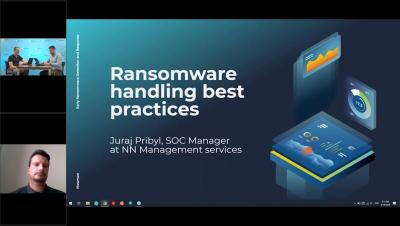
The inability to access critical digital assets can be catastrophic to your operations. Ransomware is therefore one the scariest, but also most common online assaults. Join this webinar and learn how Flowmon, a leading network detection and response tool, helps to cover visibility gaps, detect ransomware and respond even prior to locking down digital assets. We will go through Flowmon's features via live demo and show you how to trace attackers’ footprints across the system.

Data Security and Privacy Techniques for Everyone

Everyone on the internet should follow good data security and privacy practices. And when I say everyone, I mean everyone. IT pros aren’t the only people who need to protect their data. If you’re online in any capacity, there are some basic techniques you should use. I’m not talking about things like encryption and data masking; if I tried to tell my mother about those, she would stare blankly at me.

Monitoring Hybrid IT Environments With AppOptics

Over the past decade, organizations have been moving to a hybrid cloud model. A hybrid cloud is a form of cloud computing where applications are deployed on a combination of public clouds and private infrastructure. With a hybrid cloud, organizations can choose the most optimal deployment strategy for their applications while maintaining control over certain aspects, such as running user-facing services from a public cloud while storing sensitive data on-premise.