Operations | Monitoring | ITSM | DevOps | Cloud

How Much Should Your Observability Stack Cost?

Observability is critical to any software development. It is a term that describes the ability to monitor the performance and health of applications, services, and infrastructure. Observability aims to quickly identify and troubleshoot problems before they become full-blown incidents that can lead to costly downtime. But how much should you invest in an observability stack? Regarding the cost of your observability stack, there is no one-size-fits-all answer.
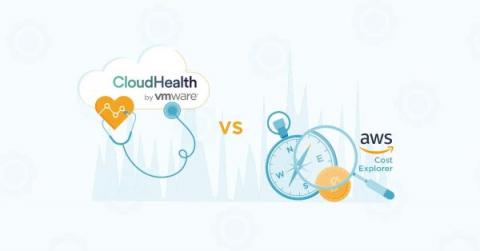

CloudHealth Vs. AWS Cost Explorer: The Definitive Comparison

Both CloudHealth and Cost Explorer have recently rebranded to different degrees. CloudHealth is now VMware Aria Cost Powered by CloudHealth. AWS Cost Explorer received a fresh coat of paint for its user interface. But do these traditional cloud financial management tools offer additional features now? And can the help provide the cost visibility you need to reduce cloud spending and improve profitability?

Reference Architecture Series: Scaling Syslog

Join Ed Bailey and Ahmed Kira as they go into more detail about the Cribl Stream Reference Architecture, with a focus on scaling syslog. In this live stream discussion, Ed and Ahmed will explain guidelines for how to handle high volume UDP and TCP syslog traffic. They will also share different use cases and talk about the pros and cons for using different approaches to solve this common and often painful challenge.

Google Colab Monitoring with Netdata

Hello, fellow data enthusiasts and Google Colab aficionados! Today, we're going to explore how to monitor your Google Colab instances using Netdata. Colab is a fantastic platform for running Notebooks, developing ML models, and other data science and analytics tasks. But have you ever wondered how your Colab instance is performing under the hood? That's where Netdata comes into play!

Introducing the Netdata demo space

Introducing Netdata's Demo Space, a quick and easy way to experience monitoring environments before you set them up yourself. At Netdata, we are always striving to provide the best monitoring experience for our users. We understand that adopting a new monitoring solution can sometimes be challenging, especially when you're unsure of how it will fit your specific environment. That's why we're excited to announce the Netdata Demo Space!

MicroK8s is now on AWS marketplace

Everyone knows that MicroK8s is an extremely lightweight, extensible, reliable, CNCF-compliant distribution of Kubernetes. What you didn’t know until now is that it is even easier to install and manage as part of your AWS marketplace experience. First, a quick reminder of why MicroK8s is great: What is new is that MicroK8s is now available on the AWS marketplace, combining all of MicroK8s advantages with the convenience of AWS.

Empowering SecOps Admins: Getting the Most Value From CrowdStrike FDR Data With Cribl Stream

In this live stream, Sidd Shah and I discuss how Cribl Stream can empower Security Operations Admins to make the most of their CrowdStrike FDR data. They address the challenges faced by CrowdStrike customers, who generate a vast amount of valuable data each day but struggle to leverage it fully due to complexity and size.

See How Coveo Engineers Reduced User Latency

Many teams are wasting far too much time and energy searching through massive amounts of log data trying to find answers to user latency issues. Metrics data doesn’t help either as it only tells you that there is a problem, not where to fix it. This is why Coveo turned to observability. Through implementing observability with Honeycomb, Coveo was able to reduce their user latency by 50 percent.

Join Jeli and Honeycomb for an Incident Response and Analysis Discussion

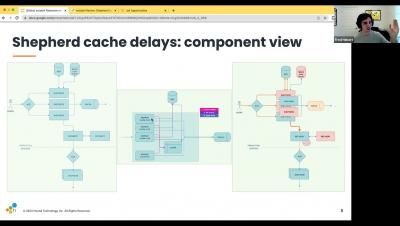
Solutions Engineers Vanessa Huerta Granda and Emily Ruppe from Jeli, along with Honeycomb’s Field CTO Liz Fong-Jones and SRE Fred Hebert discuss some of our more interesting recent incidents and how we use Honeycomb and Jeli together for incident response.

Learn How SumUp Implemented SLOs to Mitigate User Outages and Reduce Customer Churn

Blake Irvin and Matouš Dzivjak from SumUp’s Software Engineering team, Honeycomb Solution Architect Michael Sickles and Account Executive Nathan Leary, discuss how SumUp incorporated observability, specifically, SLOs, to identify and resolve issues before they grew into customer-noticeable problems.