Enterprise resource planning (ERP) modernization is a huge undertaking. ERP environments are laden with customization that can increase technical debt and impede maintenance. Organizations need to achieve a clean core while delivering a consumer-grade experience that bridges various systems of record without missing a beat. ERP environments are complex and always evolving. They’re messy and busy. They require many manual processes and span multiple, siloed systems.
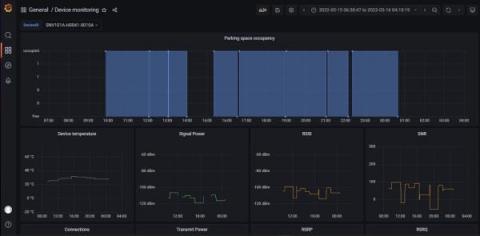
For smart cities of the future, monitoring infrastructure metrics like fuel and water levels is vital to optimizing operations. Fuelics PC designs and deploys battery-operated narrowband IoT (NB-IoT) sensors that monitor fuel, water, waste, and even parking capacity at the edge, then transmit that data to the cloud for easy viewing and monitoring.
It can be tricky for large organizations to track employee software licenses given the multitude of applications and activities that continuously take place across the business. On a given day, a typical organization with 10,000 employees using only a dozen applications still results in more than 100 thousand application interactions. Each of these employee experiences has the potential to create IT issues that IT needs to stay ahead of without going over budget.
If you were pulled into a meeting right now and asked to give your thoughts on how to achieve better outcomes with monitoring and observability, what would you recommend? Would you default to suggesting that your team improve Mean Time To Detect (MTTD)? Sure, you might make some improvements in that area, but it turns out that most of the opportunities lie in what comes after your system detects an issue. Let’s examine how to measure improvements in monitoring and observability.
Multi-cloud is inevitable. With AIOps, struggling in its complexity doesn’t need to be. Business technology stacks don’t appear out of a vacuum. For the modern cloud-enabled, cloud-dependent company (that is to say, most of them), the look from the inside looks more like an ongoing evolution than a monolithic choice.
In a Light Reading article earlier this year, Scott Wilkinson, Lead Optical Component Analyst at Cignal AI, said, "The transition to 400GbE is well underway, and pluggable coherent 400Gbps technology is revolutionizing the design of the optical networks that connect data centers.
For over 20 years Derdack has been developing products that meet the challenges of incident management. It is well documented how Enterprise Alert and SIGNL4 not only filter through the noise with advanced alert policies, but also target the right on-call engineer with the use of sophisticated scheduling, anywhere ad-hoc collaboration and 2way communication back to the originating event source.