Operations | Monitoring | ITSM | DevOps | Cloud

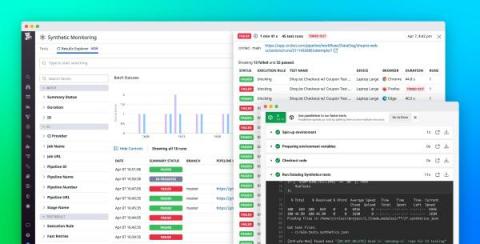
Run Synthetic tests in your CI/CD pipelines with the Datadog CircleCI orb

CircleCI is a CI/CD service that allows organizations to rapidly build, test, and deploy within their pipelines on a single platform. If you are using CircleCI for your CI/CD pipelines, you can now leverage the Datadog Synthetics CircleCI orb to implement Synthetic tests as part of shift-left testing. CI/CD testing is a widely adopted DevOps standard that helps teams mitigate any potential issues that could arise as a result of faulty code deployments.

Millions of IoT devices and routers could have a mega security flaw

An unpatched vulnerability in a popular C standard library found in a wide range of IoT products and routers could put millions of devices at risk of attack. The vulnerability, tracked as CVE-2022-05-02 and discovered by Nozomi Networks, is present in the domain name system (DNS) component of the library uClibc and its uClibc-ng fork from the OpenWRT team.

Kubernetes Logging with Elasticsearch, Fluentd and Kibana

Kubernetes, a Greek word meaning pilot, has found its way into the center stage of modern software engineering. Its in-built observability, monitoring, metrics, and self-healing make it an outstanding toolset out of the box, but its core offering has a glaring problem. The Kubernetes logging challenge is its ephemeral resources disappearing into the ether, and without some 2005-style SSHing into the correct server to find the rolled over log files, you’ll never see the log data again.

[Webinar] Unlock self-service infrastructure monitoring with the Sensu Integration Catalog

Introducing the Sensu Integration Catalog — a marketplace-like UX for simplifying new user onboarding, and deploying production-ready monitoring in a matter of minutes. The Sensu Integration Catalog is also an open marketplace that new and existing users can contribute to by sharing Sensu configurations. Backed by industry-leading monitoring as code solution, Sensu provides new users with a point-and-click interface to get started quickly, while facilitating DevOps and SRE automation best practices.

Leverage these 6 features of your ITSM tool to improve employee experience

With a paradigm shift to hybrid work practices and remote working, some critical questions arise. Firstly, how can organizations optimize employee engagement by using service management technology and principles? Secondly, how to digitize processes and assets? Thirdly, and most importantly, how to keep operations running in a world where the ‘work-from-anywhere’ workforce model is prevalent?

Is customer success the responsibility of a single team or the whole organization??

Let’s admit it, we all know that it’s a customer’s world. Today, everything is available to customers at the click of a button. Can you believe that there was once a time when there was just one service provider? Now, as many players have entered the market, it’s no longer sufficient to provide a single service. And if you don’t keep up with your customer’s needs, they’ll just move on to the next company.

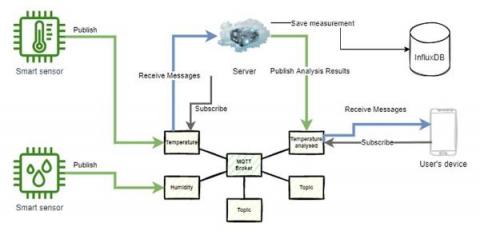
Python MQTT Tutorial: Store IoT Metrics with InfluxDB

MQTT is a standard messaging protocol used for the Internet of Things (IoT) because it requires minimal resources and can be executed by small microcontrollers found in connected devices. IoT devices have a real need for this type of lightweight protocol because it guarantees fast and reliable communication with minimal hardware requirements, keeping power consumption and manufacturing costs low.

Multi-cluster management and observability with KubeSphere

Join us as we learn about KubeSphere - a distributed operating system for cloud-native application management. Feynman Zhou (Dev Advocate) from the KubeSphere team will walk us through the rich observability features of KubeSphere and how it integrates your favourite tools for multi-dimensional monitoring metrics, multi-tenant log query and collection, alerting, events, audit logs and notification.