Operations | Monitoring | ITSM | DevOps | Cloud

When Third-Party Plugins Go Wild

Every single day RapidSpike detects thousands of problems with website third-party plugins that are causing revenue and customer experience issues, and 90% of them are not just affecting our users; they are affecting every user of that third party. The difference is with RapidSpike, we tell them about it. In 2018, a major e-commerce website experienced a significant performance failure due to a third-party plugin.

Introducing the new Lumigo Live Tail

As developers, we understand the immense value of having real-time access to live traces. It significantly enhances our ability to identify, debug, and troubleshoot potential issues within applications, streamlining the development and deployment process. Today, we are excited to introduce the new and improved Live Tail feature at Lumigo, which enhances your observability experience to a whole other level.

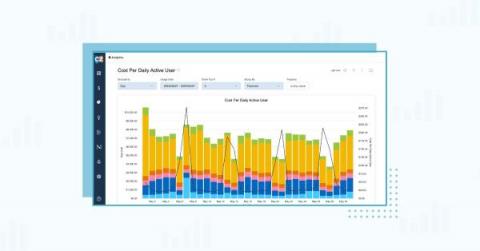
CloudZero Launches Advanced Analytics For Deeper Visibility And Savings Insights

We built CloudZero for a simple reason: Bring business fundamentals to cloud-driven organizations without stifling innovation. It sounds simple, but for years, the intrinsic complexities of the cloud and extrinsic pressures to grab SaaS market share made it near-impossible for businesses to achieve this. Until CloudZero.

The Road Ahead: 4 Ways AIOps Will Build More Resilient IT Operations

This article is the final installment in a 4-part series on leveraging artificial intelligence and machine learning (ML) for IT operations (AIOps) to provide a more efficient, reliable, agile, cost-effective, and optimized IT infrastructure. Just as our roads and highways evolve overtime to meet the demands of the travelers who use them, AIOps will continue to transform how organizations build, use, and manage their infrastructures.

Benefits and challenges of containerization for IT operations

Your IT teams are critical to improving the efficiency of your operations and ensuring long-term business scalability. But as your organization grows and demands become more complex, the challenges of managing IT operations can become difficult, especially when managing multiple applications across various server environments. Containerization has become a popular solution for some of these challenges.

How a connected ecosystem can drive growth and lower costs

It’s an exciting time to be a service provider. The shift in enterprise digital buying preferences to everything as a service has opened vast opportunities to strengthen customer relationships and create new revenue streams in such things as robotics, autonomous fleets, analytics, drone-based inspection, and remote telemetry. A connected ecosystem can help you seize these opportunities, accelerate innovation, and grow revenue while reducing the cost to serve.

Custom Java Instrumentation with OpenTelemetry

Discover how to gain unparalleled visibility and traceability into your applications with our latest video! As an expansion of our blog post, this tutorial dives into the world of Site Reliability Engineering and IT Operations, guiding you step-by-step through the process of implementing a plugin for the OpenTelemetry Java Agent using its Extensions framework.

Exploring distributed vs centralized incident command models

Recently in our Better Incidents Slack channel, there’s been some chatter around how people structure dedicated incident commanders at their company: distributed or centralized. The way I see it, there are two types of commanders: the temporary, distributed role — a hat that an on-call engineer or an engineering manager puts on during an incident. Then there’s the centralized, full-time role, where someone is the designated incident commander (or one of a few) for all incidents.

Stop the death march for your developers

Stop the death march for your developers. Developer toil directly leads to burnout, say software engineering leaders from LaunchDarkly, Okteto, Atlassian and Sleuth. And burnout leads to devs leaving your team. Don't let that happen -- remove toil. Give Sleuth a try and see how we empower software teams to build faster by making engineering efficiency easy to improve and measurable — in a way that both managers and developers love.