Operations | Monitoring | ITSM | DevOps | Cloud

The 5 Best Custom Headwear Companies in Australia for Businesses and Events (Ranked & Reviewed)

Custom hats, caps, and beanies have become an essential marketing tool for businesses, sports clubs, charities, schools, and event organizers. A well-designed piece of branded headwear can increase brand visibility, create team unity, and leave a lasting impression on customers. As great as these can be, actually having them made can seem like a bit of an issue. Your business mightn't have the tools or expertise to create these, especially at scale. That's why finding the best custom headwear companies in Australia can be recommended.

Replacing Your Legacy Monitoring Platform? Start with a Plan.

Whether you're using SolarWinds, PRTG, Datadog, or another long-standing monitoring solution, chances are your environment has evolved significantly since the platform was first deployed. New applications have been added. Infrastructure has expanded into cloud environments. Teams have developed custom dashboards, reports, alerts, and workflows. Over time, monitoring becomes deeply woven into daily operations. That's why many organizations continue using tools that no longer meet their needs.

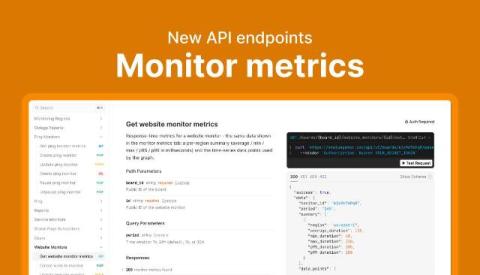
Monitor metrics now available in the v3 API

Monitor metrics are now available through the StatusGator v3 API for both Website Monitors and Ping Monitors. These endpoints provide the same latency and performance data available in the Monitor Metrics tab, making it accessible through the API and MCP server. You can find the endpoints in the API documentation.

June 24 Global Shopify outage: Timeline and impact

On June 24, 2026, Shopify experienced a widespread service disruption that affected storefronts, admin dashboards, and merchant access across multiple regions. While the outage did not impact every user, reports quickly surfaced from merchants around the world who were unable to access stores, log in to administrative tools, or complete routine operations.

Achieving sovereign and secure AIOps with Ollama and OpManager

Enterprise IT networks power business operations across the world. As businesses scale to catch up with an increasingly-demanding user base, networks also grow more complex. IT teams managing these networks have to monitor more data than before, under more stringent SLA terms, with little room for failure. Trying to do this manually across thousands of devices can take a lot of time and effort, and are prone to errors.

What Is an MCP Server for Infrastructure? How AI Agents Deploy Safely

An MCP server is the standardized bridge that lets AI agents like Claude Code and Cursor operate real infrastructure - deploy apps, provision databases, manage environments - through one governed API. Here's how MCP servers work for infrastructure, why they matter, and how to give agents production access without losing control. Romaric founded Qovery to make Kubernetes accessible to every engineering team. He writes about platform strategy, developer experience, and the future of cloud infrastructure.

Grafana 13.1 release: observability as code updates, extending Grafana Assistant across more data sources, and more

Earlier this year, Grafana 13 laid the groundwork for making it easier and faster than ever to turn your data into actionable insights. With our latest minor release, Grafana 13.1, we're building on that foundation, expanding observability as code, bringing Grafana Assistant to more data sources, and streamlining the everyday workflows teams rely on to visualize, analyze, and act on their data. Download Grafana 13.1 Below are just some of the highlights from Grafana 13.1.

Physical Asset Verification: The Complete Checklist for Multi Location Organizations

Managing assets across multiple offices, warehouses, plants, project sites, or retail locations can quickly become challenging. As organizations grow, assets are transferred between locations, assigned to employees, repaired, replaced, or retired. Over time, records can become inaccurate, leading to missing assets, duplicate entries, and compliance risks. This is where physical asset verification becomes essential.