Operations | Monitoring | ITSM | DevOps | Cloud

Beyond the 10-year mark: Extending Ubuntu Pro 16.04 LTS security coverage

A decade ago, Canonical launched Ubuntu 16.04 LTS (codenamed “Xenial Xerus”). As a Long-Term Support (LTS) release, it comes with 5 years of standard security coverage, which is doubled to a total of 10 years through Expanded Security Maintenance (ESM) for users with an Ubuntu Pro subscription. As of April 30, 2026, the 10-year ESM coverage for Ubuntu 16.04 LTS, under Ubuntu Pro, has officially reached its end of support.

Android development shouldn't start with a physical device

How on-demand Android environments lay the foundation for Android engineering Software engineering has evolved dramatically over the last decade. Development environments that once depended on dedicated hardware have become resources that can be provisioned, configured, and removed on demand. Infrastructure is now expected to be reproducible, automated, and integrated into continuous development workflows. However, Android has largely remained an exception.

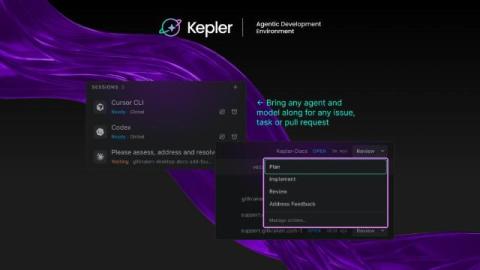
What Is an Agentic Development Environment? Kepler Is GitKraken's Answer.

Every new AI coding agent comes with the same pitch: write code faster. For most devs, that part already checks out. Codex writes a function in seconds. Claude Code refactors a file mid-meeting. Copilot fills in a test before you finish describing it. None of that touches the problem that shows up an hour later: five agents running across three repositories, each with its own diff, and no single place to see what’s stuck, what’s done, and what’s actually safe to ship.

Open Sourcing Kubex's GPU Process Exporter: Gain Visibility in Your Shared GPUs

Table of Contents GPU sharing with NVIDIA hardware is becoming easier to adopt in Kubernetes but it hasn’t been easier to observe. Time-slicing lets multiple workloads share the same GPU. MPS allows CUDA workloads to execute concurrently. Schedulers like KAI make it easier to manage these shared environments. But sharing a GPU introduces a problem that is easy to underestimate.

Digital Signature vs Electronic Signature and When ITSM Approvals Need Each

Would a single click on Approve in your service desk satisfy an auditor reviewing a high-risk change, a purchase order, or a vendor contract? Often the answer only becomes clear when someone requests a signed copy and the ticket has nothing to show. Much of this traces back to terminology. Many organizations treat electronic signatures, digital signatures, and approvals as interchangeable, and ITSM tools tend to call every sign-off an approval.

UPS Monitoring for Data Centers That Cannot Afford an Unplanned Stop

How many minutes of battery runtime are left in the unit protecting your primary rack right now? Most monitoring deployments can answer a question like that for every switch, server and virtual machine in the building. Ask about power and the dashboard goes quiet. Backup power tends to fall between two owners. Facilities buys the hardware and books the service visits, while IT owns everything plugged into it.

How to Reduce Vendor Sprawl: A Practical Guide for IT Teams

To reduce vendor sprawl, start with inventorying what your tools do, who depends on them, and where their capabilities overlap. Then decide which tools to retain, connect, or replace. When going away from tool sprawl, you need to aim for a smaller toolset that your team can manage while still supporting the work your organization needs. This guide walks through spotting unnecessary fragmentation, assessing whether consolidating makes sense or not, and transitioning to it.

Log Analysis with Machine Learning: An Automated Approach to Analyzing Logs Using ML/AI

AI log analysis helps IT teams turn massive volumes of operational data into actionable insight. By applying statistical methods, machine learning (ML), semantic analysis, and generative AI, organizations can identify unusual behavior, connect related signals, and investigate probable root causes faster. But AI-generated answers should not be mistaken for proof.

How to build a Language Server Protocol (LSP) plugin for Claude Code

Language servers give editors structured, real-time feedback: diagnostics, hover docs, autocomplete, and other guidance that would otherwise surface later. Language servers already exist for many of the languages and tools developers use every day, but Claude Code doesn’t automatically receive their feedback.