Operations | Monitoring | ITSM | DevOps | Cloud

Announcing Support for GKE Autopilot

Google Kubernetes Engine (GKE) is the preferred way to run Kubernetes on Google Cloud as it removes the operational overhead of managing the control plane. Earlier today, Google Cloud announced the general availability of GKE Autopilot, which manages your cluster’s entire infrastructure—both the control plane and worker nodes—so that you can spend more time building your applications.
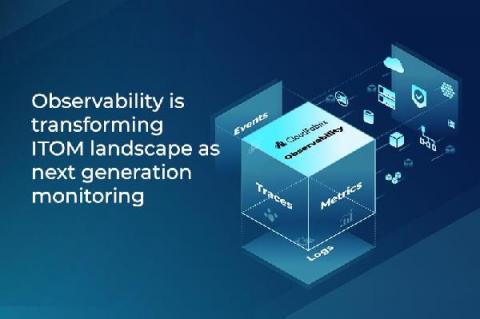
Observability is transforming ITOM landscape as next generation monitoring

First things first. Observability is inherent as a principle to a system and not something that is instilled. Here, we are addressing observability as an open source based solution in the context of insightful monitoring within the ITOM landscape. ITOM is now in the middle of addressing the needs of the expanding and dynamic nature of IT infrastructure as a function. It is no longer about being a monolithic computing stack. It is now beyond monitoring discrete infrastructure elements.

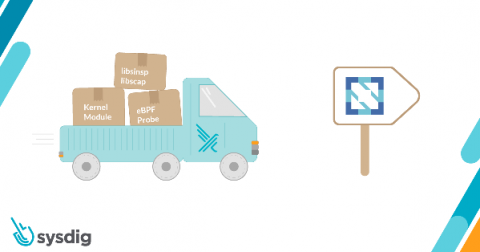
Sysdig contributes Falco's kernel module, eBPF probe, and libraries to the CNCF

Today, I’m excited to announce the contribution of the sysdig kernel module, eBPF probe, and libraries to the Cloud Native Computing Foundation. The source code of these components will move into the Falco organization and be hosted in the falcosecurity github repository. These components are at the base of Falco, the CNCF tool for runtime security and de facto standard for threat detection in the cloud.

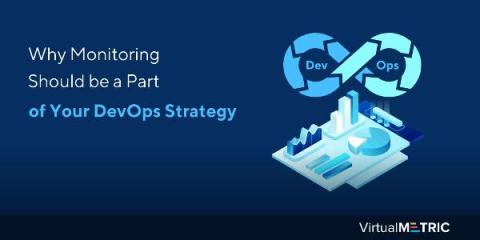
Why Monitoring Should be a Part of Your DevOps Strategy

DevOps came about as a result of ever-growing lags between development and operation. It’s a framework that deals with communication bottlenecks, allowing for smooth change management. DevOps monitoring is a crucial element and a necessity for this framework to succeed. Monitoring plays a vital role in realizing the underlying goals of DevOps. DevOps is all about eliminating technical inefficiencies and improving the speed of the whole cycle from development to deployment.

Enhance your secrets management strategy with Puppet + HashiCorp Vault

Security is paramount in today's digital world. Bad actors can use sensitive data to wreak havoc across thousands of machines in minutes if organizations do not have a solid cybersecurity strategy. Compliance requirements and regulations are increasingly calling for key management and strong encryption as part of a business's cybersecurity strategy. These are no longer optional but mandatory security requirements as DevOps also gains in popularity for agile development and application deployment.

You should know about... transformations in Grafana

Transformations were introduced in Grafana v7.0, and I’d like to remind you that you can use them to do some really nifty things with your data. All performed right in the browser! Transformations process the result set of a query before it’s passed on for visualization. They allow you to join separate time series together, do maths across queries, and more. My number one use case is usually doing maths across multiple data sources.

Is my CI pipeline vulnerable?

Your continuous integration (CI) pipelines are at the core of the change management process for your applications. When set up correctly, the CI pipeline can automate many manual tasks to ensure that your application and the environments it runs in are consistent and repeatable. This pipeline can be an integral part of your security strategy if you use it to scan applications, containers, and infrastructure configuration for vulnerabilities.

The path to production: how and where to segregate test environments

Bringing a new tool into an organization is no small task. Adopting a CI/CD tool, or any other tool should follow a period of research, analysis and alignment within your organization. In my last post, I explained how the precursor to any successful tool adoption is about people: alignment on purpose, getting some “before” metrics to support your assessment, and setting expectations appropriately.

Using the CircleCI API to build a deployment summary dashboard

The CircleCI API provides a gateway for developers to retrieve detailed information about their pipelines, projects, and workflows, including which users are triggering the pipelines. This gives developers great control over their CI/CD process by supplying endpoints that can be called to fetch information and trigger processes remotely from the user’s applications or automation systems.