Operations | Monitoring | ITSM | DevOps | Cloud

Netlify - Accelerating Sales Cycle with Catchpoint

Founded in 2014, Netlify is a web developer platform that helps you build and deploy feature-rich websites. Netlify uses Jamstack technology for the efficient deployment of websites that are optimized to deliver a great end-user experience. The platform decouples the application backend and frontend, enabling a frictionless, streamlined way to build and deploy apps at scale.

Docker: Secure, but comfortable images.

While developing Docker images for Icinga 2, Icinga Web 2 and Icinga DB we stumbled over OpenShift which doesn’t allow images to run as root by default. One has to enable that explicitly. Also admins of K8s environments being more permissive by default may decide not to allow running as the superuser. So we’ve added a USER directive to our Dockerfiles to make our customers‘ compliance departments happy.

How Our Roots in Observability Set Us up To Calculate Cost per Tenant on AWS

It’s safe to say that cost per tenant (also known as cost per customer) on AWS has been a challenging metric to obtain. Until now, your best bet has usually been to either make a best guess or build some sort of homegrown system. As of November 4, 2020, when you google “cost per tenant,” you get a few things at the top of the page. The first is a couple of blogs by AWS, where they describe an extraordinarily complex system, which you can build yourself.

What is, how to install WSL2 and why is it great news for the IT industry?

Before diving into what WSL2 is, how to install it, and how to use it – which we will – I would like to add some background information you might relate to if you were born in the 80s like me. From a very young age I have felt attracted to computers, and in my childhood they were not as common as they are today, when almost everyone has one within reach. I think my first encounter with a computer was when I was 11 or 12 years old, with an old computer that my father had in his office.

Migrating from Swiftype App Search to Elastic Cloud

Whether you consume App Search from Elastic or from Swiftype, you’re getting a set of robust APIs and unprecedented relevance controls to deliver amazing search experiences. But what if you could have that same powerful set of search tools, only better, faster, more flexible, and still built on the powerful, scalable foundation of Elasticsearch? We’d like to invite you to migrate your Swiftype App Search deployment over to App Search on Elastic Cloud.

Track your Bandwidth & Storage limits with our Quota API

At Cloudsmith, helping fledgeling startups grow from a single person operation to enterprise-level organisations is a constant joy! In those early stages, startups need all the help they can get to survive, and even veteran organisations experience similar challenges when scaling up rapidly. Cloudsmith can help with our self-service approach to managing and defining storage and bandwidth limits to keep costs under control while allowing you to scale when needed.

Green IT Project Puts Environmental Cost in Perspective

If you mentioned the word “Green IT” to tech support twenty years ago you probably would have been met with a blank stare. Climate change always felt like a conversation for somebody else—not those in charge of resetting our passwords or installing Office. But while innovations in cloud computing and business applications have helped IT cut infrastructure costs and remain competitive, that progress has come at an environmental cost.

Deploying Kubeflow everywhere: desktop, edge, and IoT devices

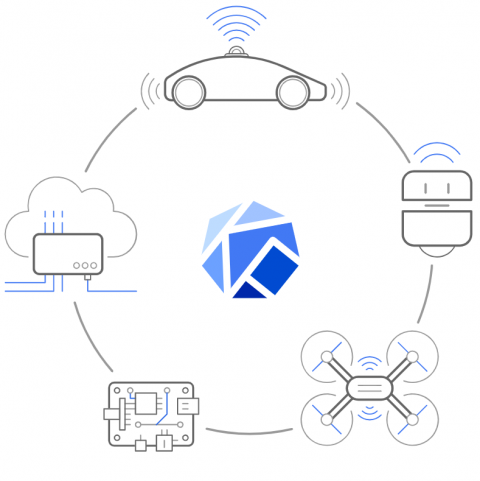
Kubeflow, the ML toolkit on K8s, now fits on your desktop and edge devices! 🚀 Kubeflow provides the cloud-native interface between Kubernetes and data science tools: libraries, frameworks, pipelines, and notebooks. > Read more about what is Kubeflow To make Kubeflow the standard cloud-native tool for MLOps within the AI landscape, the open-source community has accomplished the aggregation and integration of many projects on top of Kubernetes.

Mind the Permission Gap

A few weeks ago, researching another topic, I posed a question - Which domain within the security ecosystem has struggled to move the needle over the past few years? After trawling through a multitude of annual breach analysts reports (Verizon Breach Report, M-Trends, et al., I concluded that “identities accessing cloud infrastructure” was an irritatingly tough nut to crack.