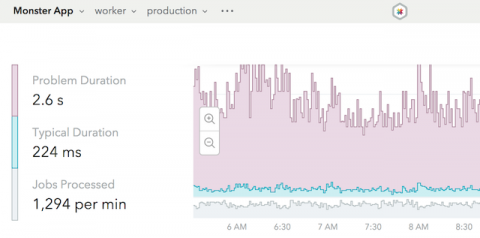
While Skylight was originally developed to instrument web requests, we understand the web interface is only one part of your server-side application. For this reason, we've been hard at work preparing Skylight for Background Jobs!
Cloud computing, containerization, and container orchestration are the most important trends in DevOps. Whether you’re a data scientist, software developer, or product manager, it’s good to know Docker and Kubernetes basics. Both technologies help you collaborate with others, deploy your projects, and increase your value to employers. In this article, we’ll cover essential Kubernetes concepts. There are a lot of Kubernetes terms, which can make it intimidating.
If you’re thinking about using containers to manage an application, there are a lot of options for technologies to use. It can be difficult to even know where to begin to make a decision. One common question is whether someone should use Docker vs Kubernetes for managing their application containers. This is a misleading question. In truth, Docker and Kubernetes aren’t competing technologies. There’s no need for them to face off.
In the last post, Samuell (from the og-aws Slack group) figured out his negative TTL problems in Cloudfront. During that session, we actually solved two different problems. This post is to finish off that conversation and address the other problem, which was how to use the default error page in Cloudfront.
So you want to A/B test your web app. The idea is simple, but the details can get messy, and you don’t want to re-invent the wheel. Services like Optimizely are pretty good, but they can be expensive and full of features you don’t need immediately. In this post, we’ll share how Sentry wrote an experimentation system with minimal work.