Operations | Monitoring | ITSM | DevOps | Cloud

DevSecOps is a Practice. Make it visible.

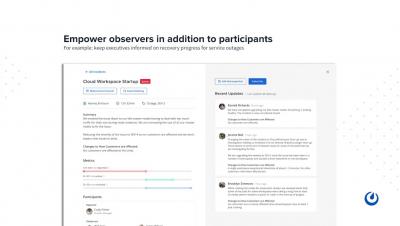
While DevSecOps feels like just another industry term, engineering teams everywhere are feeling greater and greater accountability for the security and stability of applications they build. DevSecOps is a practice, not a product. The practice consists of three primary use cases. For enterprises to be successfully implementing DevSecOps practices they need to focus on visibility, consistent communication, and data-driven incident response.

Database Cloud Migration Done Right - SolarWinds Lab Episode #95

The global pandemic has accelerated corporate planning for cloud computing and digital transformation by 2-4 years on average. But database migration, the process of moving a database from one place to another, is no walk in the park. Obstacles abound. Setbacks are common.

CI/CD and Security Testing Automation with CircleCI and NeuraLegion

Join CircleCI and NeuraLegion for a hands-on workshop around automating CI/CD and Dynamic Application Security Testing (DAST). Benefits of CI/CD Benefits of shifting AppSec left What is Developer Focused DAST? How to automate DAST and CI/CD We'll utilize CircleCI orbs during a 50 minute hands-on workshop to integrate a NexPloit engine into a CircleCI pipeline. We'll cover tips for pipeline failure, recommit, and rescan. Lastly, we’ll review results in NeuraLegion's dashboard.

ITOps In 2 Minutes | AIOps vs MLOps | Jay Menon

The OpsRamp IT operations management (ITOM) platform allows you to see everything in your hybrid IT environment, take the right action faster with integrated event and incident management and automate with confidence with AIOps. Learn more about our service-centric AIOps platform. With OpsRamp, you can detect and resolve incidents faster, understand resource dependencies and avoid costly performance issues that result in lost revenue and productivity.

Honeypods: Applying a Traditional Blue Team Technique to Kubernetes

The use of honeypots in an IT network is a well-known technique to detect bad actors within your network and gain insight into what they are doing. By exposing simulated or intentionally vulnerable applications in your network and monitoring for access, they act as a canary to notify the blue team of the intrusion and stall the attacker’s progress from reaching actual sensitive applications and data.

Manually Add a Metadata Source in SentryOne Document

SentryOne Document supports multiple metadata sources, and we plan to expand available providers in the future. But what if you want to add a metadata source that isn’t currently supported? This is where SentryOne Document’s Custom Metadata Import, available in both the Software and Cloud edition, can help. Leveraging this provider, you can manually insert any metadata source—DB2, REST API, or others.

My Build, My Way | JFrog Pipelines Extensions

Once my new projects are almost ready to share with the team and I can build and test them locally, I’ll need a CI automation tool to test and deploy each release. As a Principal Consultant Declarative Systems, I’ve been recommending JFrog Artifactory to clients looking to bullet-proof their deployments since 2016. After considering different CI solutions, we found that JFrog Pipelines has the best integration with Artifactory which made choosing this platform a no-brainer.