Using Semaphore CI to Push packages to Cloudsmith
A short demo of how you can set up a Semaphore CI workflow to push a package to a private Cloudsmith repository.


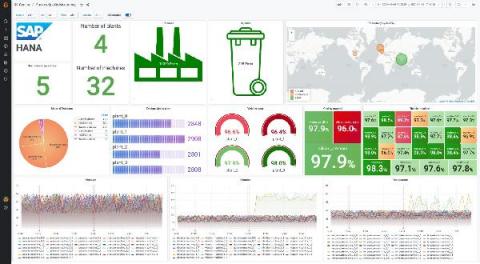
Greetings! This is Abdelkrim from the Solutions Engineering team, and I am with Sriram from the Enterprise Plugin team. We both joined Grafana Labs in February this year, and we already have some stories to share with you. I came to Grafana Labs from a big data and analytics background, and I witnessed a lot of companies storing monitoring and performance data in all kinds of analytics platforms (data lakes, data warehouses, cloud, etc.).
The OpenTelemetry project is an ambitious endeavor with of goal of bringing together various technologies to form a vendor neutral observability platform. Within the past year, many of the biggest names in tech provide native support within their commercial projects.
In the early days of web development, there was one way to measure code: WTFs per minute. It was a metric that could be applied across all languages, as every developer knew what WTF meant (Works That Frustrate, obviously). Today, however, code is too intricate — and important — for clever, opaque metrics. You need objective data that communicates the quality and stability of your code — KPIs such as events accepted, transaction outcomes, and crash-free sessions.
Observability is the key to solving problems quickly, and organizations use many tools to try to increase visibility in their environments so they don’t miss anything. Typical sources of observability include metrics, logs, and traces. The foundation of monitoring, metrics are predictable counts or measurements that are aggregated over a specific period of time. Timestamped records of discrete events that can store outputs from applications, systems, and services.
We’ve seen how much you love SquaredUp. But we’re also aware that opening up access to your SCOM and Azure data can sometimes hold you back from sharing the joy of powerful dashboarding with other teams. And what about trying to get an overview of multiple SCOM management groups without having to log into each one individually? We have the perfect solution for both problems.
Serverless computing, a model in which the provider manages the server, lets developers focus on writing dedicated pieces of application logic. Serverless computing has been adopted by many development teams because it auto-scales. Auto-scaling relieves developers of allocation management tasks, so they do not need to worry about the allocation of server resources or being charged for resources they are not consuming.