Operations | Monitoring | ITSM | DevOps | Cloud

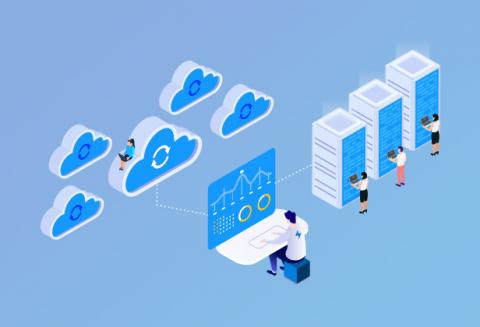
Why Monitor Cloud and On-Premise Infrastructure together?

Data centers and cloud are undoubtedly an integral part of business continuity strategies of companies to run operations with a distributed workforce amid the lockdown successfully. The Covid-19 outbreak and the resultant work from home policies have pushed businesses across globe increase in adoption of cloud infrastructure services up by 80%. Managing the entire suite of enterprise technology is not easy for businesses that have several vendors on board.


Root Cause Analysis: Uptime.com Problem Solving Tools

You manage one of the world’s largest messaging platforms. It’s the middle of the afternoon and you are feeling confidence set in. Your company has recently beefed up its capacity, and performance has never been better. You’re about to step out for a late lunch when a drop in metrics starts triggering alarms. What do you do? *record scratch* Yep, that’s me. You’re probably wondering how I ended up in this situation…

Installing the HAProxy Kubernetes Ingress Controller using Helm

Helm, the Kubernetes package manager, revamps the way teams manage their Kubernetes resources and allows them to deploy applications in a consistent and reliable way. It is a valuable tool in a continuous delivery pipeline, with support for quick updates and rollbacks. At HAProxy Technologies, we offer Helm as the preferred method for installing the HAProxy Kubernetes Ingress Controller, and we’ll show you how to customize that installation to fit your use case.

Use HAProxy Response Policies to Stop Threats

HAProxy gives you an arsenal of sophisticated countermeasures including deny, tarpit, silent drop, reject, and shadowban to stop malicious users. There are two phases to stopping malicious users from abusing your website and online applications. Step one is detection, step two is deploying countermeasures. HAProxy is more powerful than nearly every other load balancer when it comes to both detection and countermeasures.

Hosting Virtual Workshops

The global health crisis of 2020 has changed the ways tech experts are able to share their expertise. Community leaders who formerly taught technical workshops at local Meetups and big in-person conferences are forced to find new ways to connect with audiences. But the technology industry is agile and adaptable, and innovators and educators aren’t letting distance stop them from spreading knowledge. A new world of digital events has been born.