Operations | Monitoring | ITSM | DevOps | Cloud

Hybrid Cloud Kubernetes: Connecting the dots with Azure Arc-enabled Kubernetes

Canonical has recently teamed up with Microsoft, to enable Kubernetes users to manage multiple K8s clusters from a single platform - Azure Arc. Even if you’re not a Microsoft user, you can attach any on-prem or public cloud Kubernetes cluster to Arc, and manage them from a centralised point. In this demo, watch how to administrate multiple and different K8s clusters with Canonical’s distributions of Kubernetes and Arc.

Identifying and Resolving a Kafka Issue With AppSignal

Last week, we had an issue with one of our Kafka brokers. Don’t worry, it didn’t impact any customers. When monitoring things closely, you can often solve things before they impact a customer ;-). In today’s post, I’ll show you how we use AppSignal to dogfood our own issues. I’ll go through how we monitor the non-Ruby part of our stack and how we used AppSignal to detect and resolve the issue.

Understanding Database Transactions in Rails

Few things are scarier than a database slowly losing integrity over weeks or years. For a while, nobody notices anything. Then users start reporting bugs, yet you can't find any code that's broken. By the time you realize the problem, it may be happening for so long that your backups are unusable. We can avoid problems like these with skillful use of transactions.

Sysdig 2020 Container Security Snapshot: Key image scanning and configuration insights

Today, we are excited to share our Sysdig 2020 Container Security Snapshot, which provides a sneak peak into our upcoming 2020 Container Usage Report As containers and Kubernetes adoption continue to increase, cloud teams are realizing they need to adopt a new workflow that embeds security into their DevOps processes. Secure DevOps, a variation of DevSecOps, embeds security and monitoring throughout the application lifecycle, from development through production.

What your company can learn from the Bank of England's resilience proposal

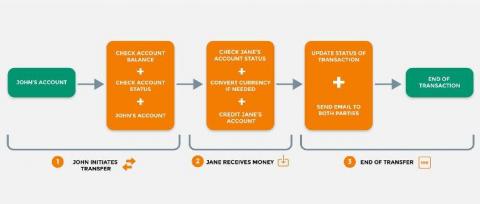
Learn how to modernize your financial systems with confidence while mitigating risk (and meeting compliance). This article was originally published on TechCrunch. The outages at RBS, TSB, and Visa left millions of people unable to deposit their paychecks, pay their bills, acquire new loans, and more.

Additional deployment environments for Bitbucket Pipelines

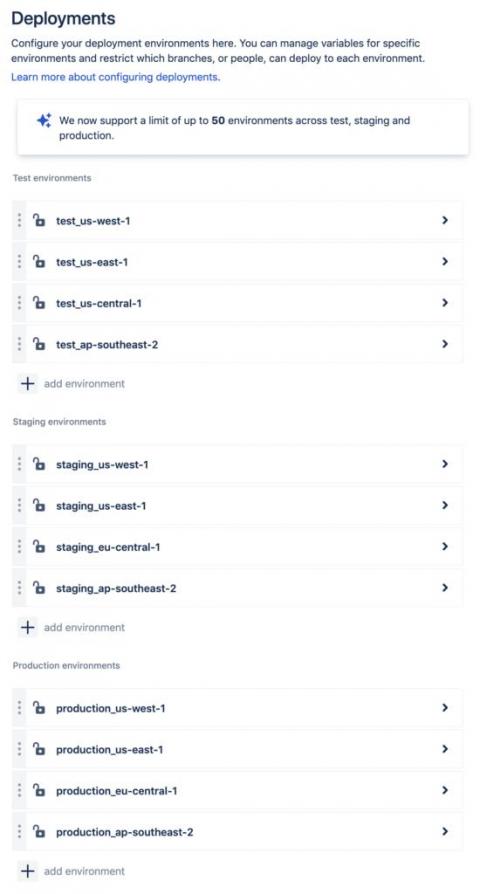
Bitbucket Pipelines provides teams with a one-stop solution to build, test, deploy and track their code, without ever leaving Bitbucket. Developers and release managers can easily track and visualize deployments, while non-technical teams can have visibility into what features are coming down the pipeline.

New Volume Reporting and Alerting Feature Announcements

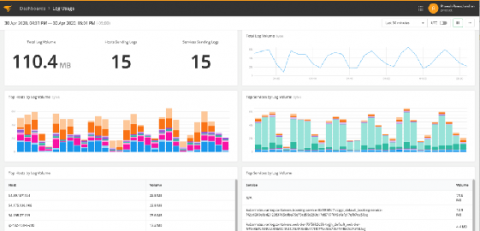
We’re excited to announce the new Log Usage Dashboard designed to provide greater visibility into your log data volume consumption. This dashboard gives you in-depth visibility into your total log volume usage, so you can better manage—and optimize—your plan usage.

Migrate NGINX from "stable" Helm Charts Repo with ChartCenter

For the last four years, anyone wanting to deploy the Ingress NGINX Controller for Kubernetes would find its official Helm chart nginx-ingress in the stable repository maintained by the Helm project. Those days are over. And not just for NGINX, the most popular Ingress Controller used as a reverse proxy and load balancer, but for all open-source K8s apps. With the advent of Helm 3, the Helm project is deprecating the stable repositories.

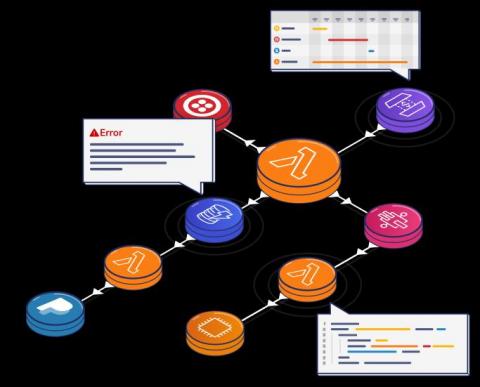
What alerts should you have for serverless applications?

A key metric for measuring how well you handle system outages is the Mean Time To Recovery or MTTR. It’s basically the time it takes you to restore the system to working conditions. The shorter the MTTR, the faster problems are resolved and the less impact your users would experience and hopefully the more likely they will continue to use your product! And the first step to resolve any problem is to know that you have a problem.