Operations | Monitoring | ITSM | DevOps | Cloud

The simplest prioritization tip money can buy

Every time I get into a serious discussion about prioritization with the teams I coach, there’s a moment where someone does a big exhale (the kind where your cheeks puff out) and says “Let’s face it. We’re trying to do way too much and we’re kidding ourselves if we think we can do it at high quality.” And every time, they’re right.
How to use Stackdriver monitoring export for long-term metric analysis

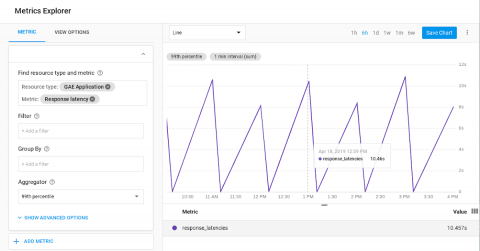
Our Stackdriver Monitoring tool works on Google Cloud Platform (GCP), Amazon Web Services (AWS) and even on-prem apps and services with partner tools like Blue Medora’s BindPlane. Monitoring keeps metrics for six weeks, because the operational value in monitoring metrics is often most important within a recent time window. For example, knowing the 99th percentile latency for your app may be useful for your DevOps team in the short term as they monitor applications on a day-to-day basis.

Why DevSecOps Is Good Business

Back in 2002 when I was a (very) junior programmer at a German enterprise software company I was lucky enough to be part of a small team that was building what you would now call a SaaS app. Up until now, the company had made all their profits by selling desktop software written in a language most people likely have never heard of: FoxPro. But instead of spending my days debugging FoxPro code, I was now green fielding JAVA web services.

Using React Select with Redux Form

At FireHydrant we use Redux Form for all of our forms. It is extremely easy to build complex form logic with all sorts of added bonuses that make using it in our React/Redux front end a no brainer. However, when we started using React Select for our select fields we started running into some issues. You are likely running into some of the same issues we did and so this blog post will help get you off the ground and integrating these two libraries together.

Your Development Environment is Missing

It’s hard to believe, but 10 years ago AWS had only five products. Chief among them, of course, was EC2. Although it feels a little quaint now, back then EC2 was an incredible offering. Anyone could fire up a server in seconds, install some code, and transform that generic server into any service one could imagine.