Operations | Monitoring | ITSM | DevOps | Cloud

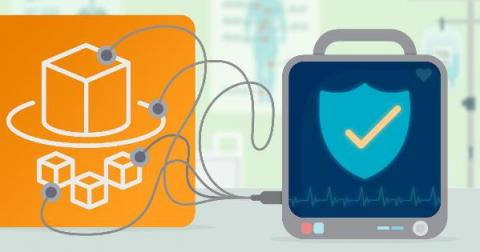
Digging into AWS Fargate runtime security approaches: Beyond ptrace and LD_PRELOAD

Fargate offers a great value proposition to AWS users: forget about virtual machines and just provision containers. Amazon will take care of the underlying hosts, so you will be able to focus on writing software instead of maintaining and upgrading a fleet of Linux instances. Fargate brings many benefits to the table, including small maintenance overhead, lower attack surface, and granular pricing. However, as any cloud asset, leaving your AWS Fargate tasks unattended can lead to nasty surprises.

No-code Lambda Monitoring

Auto-instrumenting Lambda Monitoring didn’t originate through a focus group or business plan. It started as a hackathon project in which our growth team used Cloudwatch to build a prototype that could instrument Lambda functions with Sentry. We did this by using Cloudformation’s stack to automatically create resources in a customer environment while streaming CloudWatch Logs to Sentry through the Kinesis Firehose.

A guide for CTO: 8 questions to ask before using Kubernetes

Congratulations, you finally consider moving your apps to Kubernetes. It is a big day! Here is a checklist to ensure you did not forget anything essential to increase your chances of success using Kubernetes. We divided those points into three sections, from the most important to the least. Let’s go.

How shuffle sharding in Cortex leads to better scalability and more isolation for Prometheus

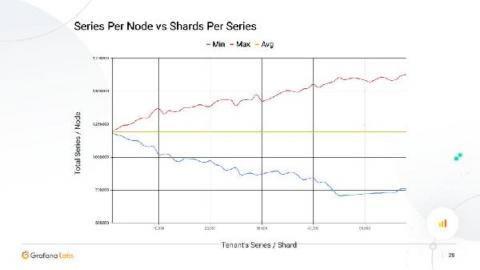
For many years, it has been possible to scale Cortex clusters to hundreds of replicas. The relatively simple Dynamo-style replication relies on quorum consistency for reads and writes. But as such, more than a single replica failure can lead to an outage for all tenants. Shuffle sharding solves that issue by automatically picking a random “replica set” for each tenant, allowing you to isolate tenants and reduce the chance of an outage.

Observability: It's the User Experience, Stupid!

Observability, which originated from control theory, measures how well you can understand a system’s internal states from its external outputs. Observability uses instrumentation to provide insights that aid monitoring. In DevOps, gaining observability is achieved through a set of monitoring solutions. The shift to use one vendor platform to do so, versus multiple solutions, make sense as.

Two Service Catalog Items HR Can Use | SolarWinds Service Desk

The service catalog can automate tasks and approvals within workflows. Though it’s normally considered an IT tool, other departments can use it to deliver services to employees. Watch this video to learn how to use the service catalog to automate two popular human resources workflows.

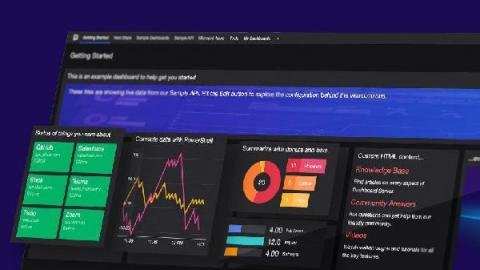
Dashboard Server: Working with the Elasticsearch Tile

I’ll come clean and admit it – this part of the series will be a bit interesting given the fact that I know very little about Elasticsearch. So really, this is an honest test of the question – “can I still build something good with Dashboard Server even if I only have nominal knowledge of the tool where the data is sourced from?”