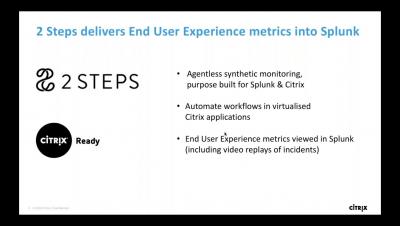
2 Steps Webinar with Splunk & Citrix
2 Steps & Andy Bearsley (IT Ops Specialist at Splunk) discuss how 2 Steps and Splunk works together to predict when IT failures can occur. #AIOps #PredictiveITOps


As government agencies accelerate migrating their operations to the cloud, they need to adhere to strict compliance and security standards. The Federal Risk and Authorization Management Program (FedRAMP) provides the standard that these agencies—and their private-sector partners—must meet to work and manage federal data safely in the cloud.
We’re happy to announce the release of AppSignal for Elixir 2.1.0. 🥳 In this version, we’ve made our error helpers more flexible than before. You could already send Elixir exceptions directly through AppSignal and now you can add extra metadata to errors when using send_error/2-4. Let’s go through all of the changes 😀
Monitoring is a major part of a Managed Service Provider or MSP. After all, it emerged as remote management and monitoring (RMM) of servers. However, today MSP’s scope is well-defined and distinguished from standard RMMs. Nevertheless, monitoring is still a key service that these companies provide to their clients. Managed service providers take care of all the IT infrastructure of their clients.
In this article we explore the basics of monitoring Amazon Web Services (AWS) by feeding metrics to Grafana through Hosted Graphite’s agent and also through Hosted Graphite’s AWS add-on. This will allow us to monitor metrics from applications and servers hosted in AWS with clarity and depth. This article assumes you have created a Hosted Graphite account.
As part of my job as a tech evangelist and a pre-sales engineer here at SquaredUp, I often find myself talking to a lot of people. And understandably, when you as a consumer are trying to evaluate a product that you may potentially invest in, it’s only natural that you want to compare different products and decide which one’s better and/or offers more value for money and why.
Welcome to another monthly update on what’s new from Sysdig. Our team continues to work hard to bring great new features to all of our customers, automatically and for free!
Syslog takes its name from the System Logging Protocol. It is a standard for message logging and has been in use for decades to send system logs or event messages to a specific server, called a Syslog Server.
In a previous post, we went through a few input plugins like the file input plugin, the TCP/UDP input plugins, etc for collecting data using Logstash. In this post, we will see a few more useful input plugins like the HTTP, HTTP poller, dead letter queue, twitter input plugins, and see how these input plugins work.