Operations | Monitoring | ITSM | DevOps | Cloud

How Do You Measure Application Performance?

Web performance isn’t just about how long a website needs to render all its page elements—it also covers techniques for monitoring an application’s runtime, user-defined transactions, component response times, and network requests. The important thing is using performance data to evaluate the success of your app or service, whether you’re trying to compare different versions or introduce new capabilities.

Reducing MTTR for DevOps and SREs with PagerDuty Process Automation and InfluxDB

Mean time to resolution (MTTR) is a metric that transcends industry and technology. It’s a measure of how quickly, on average, support teams identify, act, and resolve IT issues and incidents. Because MTTR directly relates to service quality, maintaining a low MTTR is a critical goal for DevOps and SRE teams. These teams have a vested interest in resolving issues quickly because escalating incidents to higher levels of the support team increases response and resolution times.

Relational Database vs. Non-Relational Database

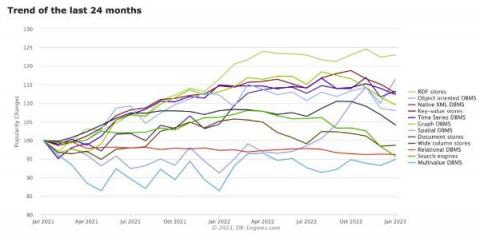
Relational database or non-relational database: which should you use for your projects? It’s a common question. When choosing the database type that’s right for your requirements, it’s important to understand the differences between the two. Both database types are practical in different situations and use cases and have commonalities.

My Most Surprising Discoveries from The SRE Report 2023

I’ve had the honor and privilege of authoring The SRE Report for the last three years. For the 2023 version, this included working with some amazing individuals like Anna Jones, Kurt Andersen, and Steve McGhee. Download The SRE Report 2023 here (no registration required).

5 Reasons Why OpenTelemetry is the Future of Observability

It has been said that open source is eating the world and in the observability space, the project behind this movement is OpenTelemetry. The project is quickly becoming the standard for instrumentation and collection of observability data. Why is an open standard and open-source approach to instrumentation and data collection so compelling? This talk will provide five reasons why OpenTelemetry is disrupting the observability market.

A Year in Review - And What's in Store for InvGate in 2023

As the years zip by at increasingly whiplash-inducing speeds, I feel a strange mix of emotions. On one hand, yes, it is indeed a little startling that 2022 has come and gone so quickly. But as I look back on the passing year, I am also amazed at the number of things that occurred, the challenges we faced, the goals we accomplished, and the many things we’ve learned. All in all, 2022 was a fantastic year for InvGate. Our community of users, developers, and employees is bigger and better than ever.

CFEngine Build System version 3

Our beloved cfbs CLI tool for working with CFEngine Build is rapidly evolving. At the time of writing, we are currently at version 3.2.1. Thus I would like to take this opportunity to talk a bit about the latest and greatest features; including support for users to manipulate input parameters in modules, as well as a couple of new build steps.

Generate RUM-based metrics to track historical trends in customer experience

Datadog Real User Monitoring (RUM) provides end-to-end visibility into the user experience and performance of your browser and mobile applications. RUM allows you to capture and retain complete user sessions for 30 days. This means you can pinpoint bugs, prioritize issues, and determine fixes with data collected across an entire quarter.

Warehouse Asset Tracking System: Organizes Your Assets in Seconds

Are you experiencing difficulties in locating a specific asset in your warehouse? Whether it be boxes, containers, or individual items, having visibility to all your assets is necessary for a productive and compliant warehouse. But, keeping track of all of those individual parts can be challenging, especially if your warehouse needs to manage thousands of pieces of machinery, goods, or assets.