Operations | Monitoring | ITSM | DevOps | Cloud

IT Operations Strategies in an Economic Slowdown

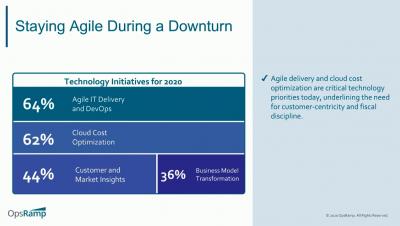
IT leaders will need to rethink and readjust their business plans for 2020 during the Covid-19 pandemic. In a time of record unemployment and widespread remote workforces, businesses are having to adapt operations and marketplace strategies overnight. This interactive webinar will discuss results of a recent survey asking IT operations executives about technology priorities, budgets, and hiring plans needed to succeed in a volatile economic environment.


Detailed view on Azure Function Custom Handlers

Custom Handler is a feature in Azure Functions which lets you bring your own command, script, or executable, and hook it up to Azure Functions Triggers and Bindings. Custom Handler implements a lightweight Web Server. In other words, you can write your own APIs, in any language i.e. it need not be a language supported by Azure functions. You can just hook up your Azure function host with your custom API and let your function act as a proxy.

Manage logs from multiple clouds and on-premises workloads together

We’ve heard from our customers that you need visibility into metrics and logs from Google Cloud, other clouds, and on-prem in one place. Google Cloud has partnered with Blue Medora to bring you a single solution to save time and money in managing your logs in a single place. Google Cloud’s operations management suite gives you the same scalable core platform that powers all internal and Google Cloud observability.

GitKraken vs Sourcetree

Software developers, students, and a few sea creatures have spoken. GitKraken is the most popular Git GUI in the world—named the most used graphical user interface for Git in the 2020 State of the Software Development Report. You might, however, be on the fence; maybe you’re Git-curious, but not sure whether to ‘commit’ (sorry) to a GUI. After all, there are several out there. Which one should you choose?

The Application Performance Monitoring Journey

One of the best parts of our job is enabling you to become the best #ITPerformanceHero that you can be. But behind the scenes, eG Innovations is filled with talented team members who wear their own IT Hero capes. We want to take some time to introduce you to some of the people who make eG Innovations the leading performance monitoring company on the market. We’re pleased to introduce Arun Aravamudhan, Head, APM and Web UX products.

Feature Spotlight: Auto-Tracing

Lumigo’s Auto-Tracing allows you to implement distributed tracing on your Lambda functions with 3-clicks and no manual code changes. If you’ve already decided to move to a serverless infrastructure, you probably understand the importance of monitoring your AWS Lambdas and what it might entail. For the few out there that are still wondering what monitoring AWS Lambda means, I’ll break it down for you in a couple of steps.

Getting started with adding a new security data source in your Elastic SIEM: Part 1

What I love about our free and open Elastic SIEM is how easy it is to add new data sources. I’ve learned how to do this firsthand, and thought it’d be helpful to share my experience getting started. Last October, I joined Elastic Security when Elastic and Endgame combined forces. Working with our awesome security community, I’ve had the opportunity to add new data sources for our users to complement our growing catalog of integrations.

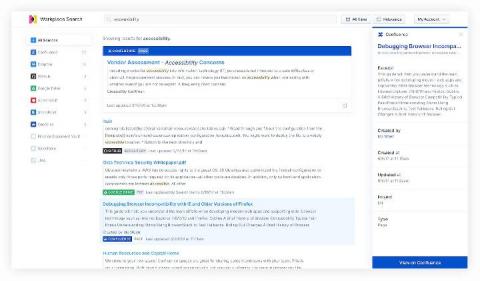
Searching Confluence with Elastic Workplace Search

For many companies, Elastic included, wikis developed with Confluence are a critical source of content, procedures, policies, and plenty of other important info, spanning teams across the entire organization. But sometimes finding a particular nugget of information can be tricky, especially when you’re not exactly sure where that information was located. Was it in the wiki? In a Word doc? In Salesforce? A GitHub issue? Somewhere else?

Maze Ransomware Attack Hits Cognizant

New Jersey-based service provider Cognizant is the latest victim of the Maze ransomware attack. This is an unfortunate reality check, proving that hackers don’t stop their calculated, malicious activities for COVID-19. Accordingly, managed service providers (MSPs) are still largely vulnerable to these malicious crimes.