We created the Fleet Project to provide centralized GitOps-style management of a large number of Kubernetes clusters. A key design goal of Fleet is to be able to manage 1 million geographically distributed clusters. When we architected Fleet, we wanted to use a standard Kubernetes controller architecture. This meant in order to scale, we needed to prove we could scale Kubernetes much farther than we ever had.
By design and tradition, telecoms networks are built to last. But in a world where the rate of innovation seems to be accelerating, the end result is that a lot of legacy infrastructure needs to keep pace with, and accommodate, multiple ‘next generation’ phases. How long this can be maintained before the imperative to rip and replace becomes impossible to ignore is the multi-million-dollar question.
A few years ago, we realized that spending in our AWS product test environment had jumped significantly from one month to the next. We drilled down into the issue and traced it to some RDS database instances that had been spun up to test new product features. No one realized that these expensive instances were left running after the tests were complete, and subsequently racking up charges for several months.
That’s the question ops personnel have been asking for decades whenever something goes wrong in the production IT environment. Everything was working before, so the reasoning goes, and now it’s not. We have an incident. And to figure out what caused the incident – and hence, to have any idea how to fix it – we must know what changed. There’s just one problem with this approach. What if everything is subject to change, all the time?
In today's press release, we announced the incorporation of Ivanti patch management technology into the XM Cyber BAS platform! XM Cyber is a multi-award-winning leader in breach and attack simulation (BAS) advanced cyber risk analytics and cloud security posture management.
PuTTY is a free program (MIT license) for x86 and AMD 64 architectures (now in experimental stages for ARM). It was developed in 1997!, by Simon Tatham, a British programmer. In this blog, we have been reviewing this useful program for several years, and even the great Pandora FMS team has confirmed it just now in 2020, in the list of network commands for Microsoft Windows® and GNU/Linux®. What if it deserves its own article? Read and judge for yourselves.
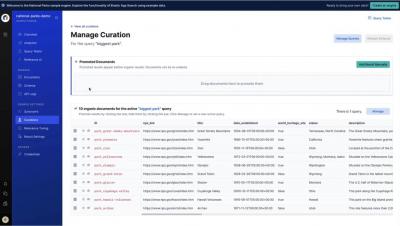
We are pleased to announce the general availability of Elastic 7.10. This release brings a broad set of new capabilities to our Elastic Enterprise Search, Observability, and Security solutions, which are built on the Elastic Stack — Elasticsearch, Kibana, Beats, and Logstash. 7.10 delivers significant new capabilities to market, transforming the way in which our customers and users can trade off cost, performance, and depth of data with searchable snapshots.