Operations | Monitoring | ITSM | DevOps | Cloud

The latest News and Information on API Development, Management, Monitoring, and related technologies.

Build Log Automation with Last9's Query API

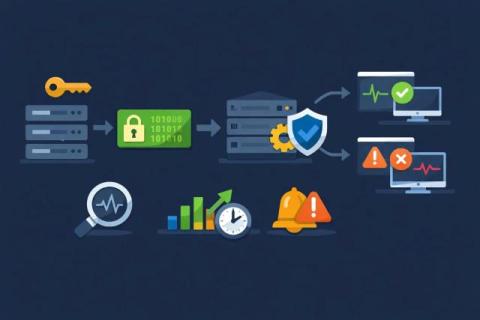
Manual log investigation is one of those engineering tasks that quietly drains hours without offering much real value. You're debugging an incident. Monitoring shows elevated error rates. Now begins the familiar drill: It’s a tedious cycle, and it doesn’t scale. The whole process breaks down when you’re trying to automate incident response, run continuous security monitoring, or generate compliance reports.

Enable Kong Gateway Tracing in 5 Minutes

Kong Gateway is a popular API gateway that sits at the edge of your infrastructure, routing and shaping traffic across microservices. It’s fast, pluggable, and battle-tested, but for many teams, it remains a black box. You might have OpenTelemetry set up across your application stack. Traces flow from your app servers, databases, and third-party APIs. But the moment a request enters through Kong, observability drops off.

API Staging Is Not Production - But Speedscale Makes It Close

Staging environments are often looked at as the testing ground ahead of the “real” production environment. The idea is simple – build a duplicate of your production environment, run your tests, and ship with confidence. But the reality of using staging in the real world as part of a holistic API testing strategy is rarely that clean. No matter how meticulously you mirror production services, staging always falls a little short.

Generating end-to-end tests with AI and Playwright MCP

When I started using Playwright, there was a single command that blew me away. I immediately became (and still am) a huge Playwright Codegen fanboy. Playwright's codegen command opens up a browser window, and whatever you do in this window will be recorded. Navigating URLs, clicking links, and filling out form elements—the Playwright inspector records all your actions and generates a Playwright test for you. Magic!
Sponsored Post

Boba Paradox

It's 2PM on a Thursday. Your engineering team is knee-deep in bugs from a recent release. But what's the Slack channel buzzing about? Not flaky tests. Not integration coverage. Not mocking services. It's whether to order brown sugar boba or taro with oat milk. Let's be honest: for many companies, it's easier to justify $8 on boba than $800 on testing tools. And we're not here to judge-we're here to understand why.

From Guesswork to Guarantees: How Traffic Replay Improves Release Confidence

In modern software development, the pressure to move fast is matched only by the need to get it right. Teams working within the software development lifecycle (SDLC) must constantly balance velocity and quality, ensuring releases are stable, secure, and performant. Traditional software development models often relied on manual verification and human intuition to validate releases; however, as systems have grown in complexity, guesswork is no longer sufficient to meet these rising needs.

Streamline API testing with Proxy Mock! Capture, mock, and replay API calls locally

Alan Mon introduces Proxy Mock, a powerful tool for capturing and replaying API calls. Learn how to effortlessly record inbound and outbound API requests and responses. The demonstration highlights how Proxy Mock operates entirely on your local machine, eliminating the need for cloud services or internet connectivity for testing. See how to set up Proxy Mock, inspect captured API calls (including request/response headers, body, and unique signatures), and leverage it to mock API responses for seamless local testing, ultimately boosting productivity and reducing the need for costly non-production environments.

The Defense-in-Depth Approach To Application Monitoring

In cybersecurity, defense-in-depth is a fundamental principle – you never rely on a single security measure to protect your systems. The same philosophy applies to application monitoring. No single monitoring approach, no matter how sophisticated, can capture every possible failure mode of your application. This is why layered monitoring isn't just a best practice – it's essential risk mitigation.

Announcing Checkly Uptime Monitors: Simple, Scalable, and Built for Developers

When Checkly launched, it was the first of its kind, enabling developers to monitor complex workflows easier than ever using the automation tooling (Playwright, Terraform, etc) they already knew and loved. We’ve helped detect and resolve issues for 1000s of companies—ranging from monitoring crucial log-ins, to purchasing products, to setting up client instances for millions of monthly users But what about the simpler stuff?