
Operations | Monitoring | ITSM | DevOps | Cloud

GA4 Alternative: What Engineering Teams Should Check Before Switching

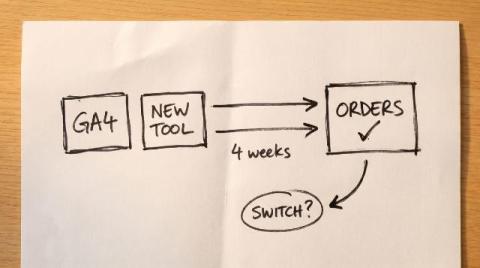
A GA4 report shows fewer purchases than the order system, a row says data was withheld, and the BigQuery export does not match the screen. Marketing wants to know which number is right, and the data team has to answer. Here is how to tell which GA4 limits you can fix in settings, which ones mean it is time for a GA4 alternative, and how to switch without losing a month of numbers.

How Intelligent Tech Website Design Streamlines IT Operations

In the modern enterprise, a company website is rarely just a digital brochure. It acts as the critical entry point for customer success workflows, support requests, and user onboarding. When digital architecture is treated solely as a marketing asset, it often leads to disjointed user experiences and operational bottlenecks for backend IT teams. Treating the front end as an operational tool changes this dynamic entirely. Investing in specialised Technology & SaaS Website Design ensures that web portals are built with intuitive self-service documentation, secure customer login areas, and seamless API integrations.

Playwright End-to-End Testing with Recorded API Mocks

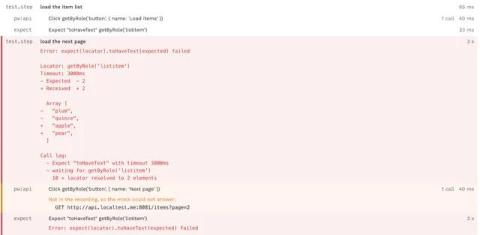
Your Playwright test clicks Next page, waits for the item list, and times out. Now you’re digging through a trace to find out whether the page broke or an API call failed. Traditional browser-testing workflows focus on clicks, page state and UI assertions. Those checks tell you whether a user journey works, but investigating a failure also means understanding the APIs behind the page.

Unified API Inventory reduces the time to patch with cross-source correlation

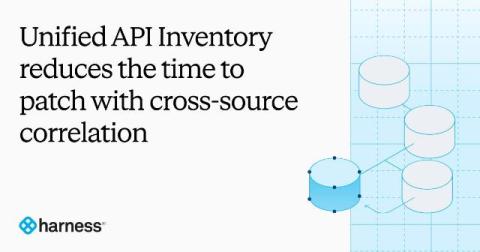
Cross-source API correlation connects runtime findings to their code, documentation, and fixes for improved defense against machine-speed attacks. It's late on a Thursday, and a runtime alert fires on POST /api/v2/payments in production. The finding is clear. What happens next is not. In fact, it creates a host of questions to be answered: Every AppSec team knows this hunt. And every day spent hunting for the right repo and owner is a day the attacker can still exploit a vulnerability.

Get Ship Done: Everything We Shipped in October 2026

Harness October 2026 Updates: 150+ Features, Cosmos, FedRAMP 20x This Month's Biggest Ships: The shipping velocity at Harness skyrocketed. Harness shipped 150+ features in October, one about every 5 hours across 31 days! October's list covers both ends: code creation and software delivery. The biggest ship is Cosmos, a new agent that takes engineering work from ticket to pull request. The rest carries that pull request to production and keeps it safe.

IBM MQ Alternatives: When ActiveMQ and Artemis Make Sense

What IBM MQ costs an organisation is a knowable figure. It comes off a renewal statement, an entitlement count or a licensing review, and finance can put a number against it down to the core. What replacing it would save is not knowable in the same way. There is no independent case study in the public record carrying real durations, team sizes and application counts, and every migration timeline in circulation comes from an organisation selling the migration.

The Jolokia Problem: Eight CVEs, One Door in Apache ActiveMQ

The Apache ActiveMQ Jolokia endpoint has been the route to remote code execution in three separate years. In 2023, it was reflection into the JVM. In 2024, a default configuration left it without a login. In 2026, it was the broker's own management operations, patched in March, exploited in April, and reopened three more times by summer.

AI budget season: 87% are raising it, 61% can't justify it

87% of finance leaders are raising their AI budget for FY2027, 45% of them by more than 20%, even though 61% already spend more on AI than they can justify. Most can't see where it goes: 54% can't break AI spend below a rough category, so budgets default to the total and keep climbing. The teams that allocate spend, tying each AI dollar to the team, product, or outcome behind it, are the ones who can defend the number to a board.

Harvey AI pricing in 2026: every reported number, and how to build the business case without a rate card

Harvey AI pricing is not published: every deal is sales-negotiated. Reported figures across procurement research converge on roughly $1,200 per lawyer per month at the base, 20-to-25-seat minimums, and 12-month terms, putting reported entry floors near $290,000 to $360,000 a year. Premium bundles run higher. No free tier, no monthly plan, no self-serve. Every figure on this page is labeled for what it is: disclosed by Harvey, reported by named research and journalists, or computed from those reports.