Operations | Monitoring | ITSM | DevOps | Cloud

The latest News and Information on Continuous Integration and Development, and related technologies.

Premium self-hosted runners are generally available

In December, we shared our plans to introduce pricing for self-hosted runners. You told us loud and clear that a free option matters. Today, as Premium Runners become generally available, we are happy to share that we will continue to have a free tier, which includes the use of up to 100 self-hosted runners as part of your plan. If your team needs more scale, dedicated support, or advanced management features, you can upgrade to Premium Runners when you’re ready.

BigQuery CI/CD and Database DevOps with Harness | Harness Blog

Modern data platforms are evolving rapidly, and Google Cloud BigQuery has become a core part of analytics, AI, and large-scale reporting architectures. Teams (including Harness) rely on BigQuery to process and analyze massive datasets, but managing schema changes in a secure, repeatable way can still be challenging.

Stop pushing broken code to CI: Wire Chunk sidecars into agent hooks

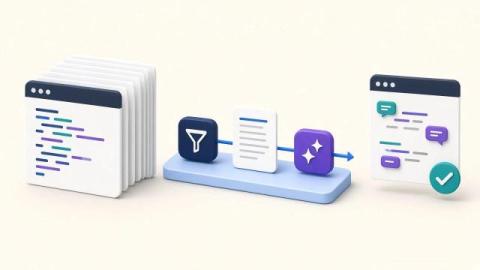
AI agents can write code faster than any developer. But for most teams, the feedback loop hasn’t kept pace. The agent generates code, pushes it to CI, and minutes later a full pipeline run catches a simple linting error or a failing unit test. By then the agent has moved on. Getting back to a working state means rebuilding context from scratch and burning tokens just to fix something that should never have shipped in the first place.

Run your first microbuild in 5 minutes

AI coding agents produce code faster than most teams can validate it. Without a validation step between the agent and CI, every problem gets caught after the push, and feedback arrives long after the agent has lost context. Agents need consistent feedback while they’re working so that small failures get fixed locally and CI stays focused on moving code into production.

Same team, but building more ft. Chris Kelly of Augment Code

Most teams obsessing over token costs are measuring the wrong thing. The real savings from AI aren't in lines of code written faster. They're in the coordination overhead that disappears when fewer humans need to align before anything gets built. Chris Kelly, Head of Product at Augment Code, joins Rob to cover why prototypes have replaced specs, how agents enable dynamic team capacity the way cloud replaced over-provisioned servers, and what "good code" even means when your primary reader is an LLM. In this episode.

Reduce CI Costs Without Slowing Down Development | Harness Blog

Continuous integration (CI) costs can escalate quickly as engineering teams scale. While most organizations focus on cloud bills, the true cost of CI includes slow build times, developer wait time, inefficient test execution, and overprovisioned infrastructure. CI cost optimization is the practice of reducing the total cost of CI pipelines by improving build efficiency, minimizing compute usage, and eliminating unnecessary work without slowing down development.

Agentic Pipelines now supports Claude Code

Last month, we introduced Agentic Pipelines, a new way to orchestrate AI agents to automatically, and routinely, handle the repetitive engineering chores so you can get back to solving the fun, cool problems. When we launched, Agentic Pipelines supported Atlassian’s developer AI agent, Rovo Dev. Today, we’re opening up Agentic Pipelines to even more teams: You can now run agentic steps in your pipeline with Claude as the provider.