The latest News and Information on Continuous Integration and Development, and related technologies.
The appearance of containers and their performance benefits compared to the existing paradigm of virtual machines has forced several companies to rethink their software lifecycle, especially the delivery part. Continuous integration and deployment tools (CI/CD) are passing through a second renaissance phase which is characterized by new approaches centered around short-lived environments that are launched and destroyed in a much more dynamic way.
Now that we know the advantages of leveraging Ketch over other tools such as Helm to ease the deployment of our applications (BLOG: Helm vs. Ketch when Deploying Applications), a good next step is for us to understand how we can tie Ketch to our CI pipeline and have an automated deployment process. For this example, we will leverage Ketch, GitHub Actions, and a Kubernetes cluster on Google Kubernetes Engine (GKE).
When I started working at Purple managing the E-commerce stack, I inherited a single AWS EC2 instance that represented our entire infrastructure. The problem was, the company was doubling in size every few months, and with this exponential increase in load combined with the issues we were already experiencing with this infrastructure, it became a large business risk.
The last year was undeniably a different year for everybody. At the start of 2020, Coronavirus spread all over the world, resulting in a global pandemic. Covid affected the way we live, work, meet other people, and has drastically changed everyone’s lives in ways that we could not ever imagine. In a world of uncertainty, DevOps has undeniably become even more important.
Data from monitoring tools like Datadog are useful for developers to help them understand whether the code they've deployed is healthy or needs to be fixed or rolled back, or when there is an incident to investigate. As a deployment mission control, Sleuth helps developers see metrics data from a developer-centric point of view - by deployment - and interpret such data for them.
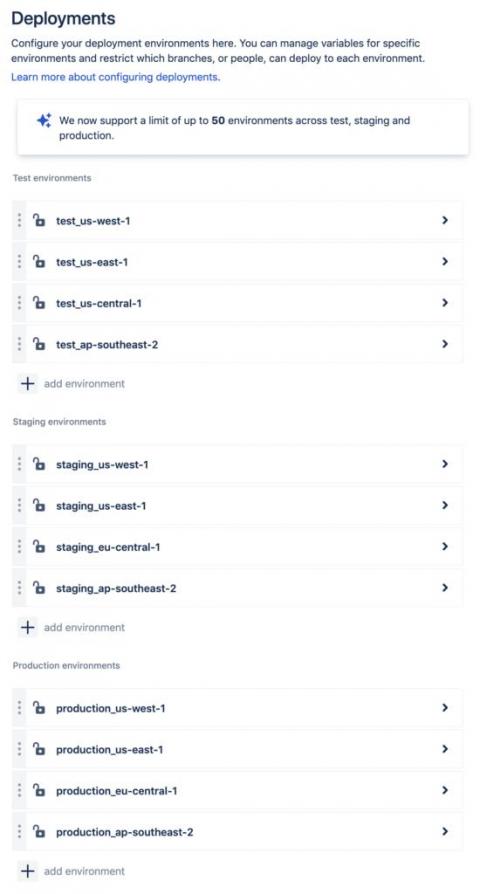
One of the most typical challenges when deploying a complex application is the handling of different deployment environments during the software lifecycle. The most typical setup is the trilogy of QA/Staging/Production environments. An application developer needs an easy way to deploy to the different environments and also to understand what version is deployed where. Specifically for Kubernetes deployments, the Helm package manager is a great solution for handling environment configuration.