Operations | Monitoring | ITSM | DevOps | Cloud

The latest News and Information on DevOps, CI/CD, Automation and related technologies.

Snyk vulnerability compliance with kosli evaluate trail

Kosli recently released kosli evaluate trail, a command that evaluates selected attestations in a Kosli trail against a Rego policy file. We used it to build a complete and useful solution for tracking Snyk container vulnerabilities for cyber-dojo (an open-sourced browser based online tool for practising TDD which Kosli uses for demos). You’ll read about what we built, why we built it, how we tested it, and specifically.

Claude Mythos: Sorting Fact from Fiction and What It Means for Cyber Defense in 2026

Claude Mythos may be wrapped in hype, but the core signal is real: AI is making vulnerability discovery much faster, which means defenders have less time than ever to patch and enforce secure configurations. The real risk isn’t just smarter models, it’s that security teams will face a flood of new findings while the window between disclosure and exploitation keeps shrinking.

Engineering teams in 2027

There's a conversation I keep having with our design partners at incident.io. It starts when I ask "what are you doing with AI internally?" and lands in a similar place every time. The shape of how their engineering teams work is changing fast. Not in vague "AI is transforming everything" ways, but in concrete, repeatable patterns. Different companies are building the same things. The frontier teams are six to twelve months ahead of the average, and they're describing the same future.

AI Observability In 2026: What It Is, The Five Pillars, And Why Cost Is The One Everyone Skips

AI observability covers performance, quality, reliability, safety, and cost. Most tools handle the first four. Here's what each pillar means, which tools cover which, and why cost is the dimension enterprises keep missing.

Why Standard Service Desk Automation Doesn't Reduce Ticket Volume (and What Does)

The platform has been live for six months. Workflows are running, the virtual agent is fielding requests, and the vendor dashboard shows deflection numbers are going up. Then someone pulls the actual ticket volume report, and it looks almost identical to the one before the rollout. This comes up constantly in enterprise IT, and most teams respond the same way. They tell themselves the platform needs more automations, a wider user base, and another quarter to mature. Months pass.

Agentic Pipelines now supports Claude Code

Last month, we introduced Agentic Pipelines, a new way to orchestrate AI agents to automatically, and routinely, handle the repetitive engineering chores so you can get back to solving the fun, cool problems. When we launched, Agentic Pipelines supported Atlassian’s developer AI agent, Rovo Dev. Today, we’re opening up Agentic Pipelines to even more teams: You can now run agentic steps in your pipeline with Claude as the provider.

From Traffic Context to Confirmed Fix in 3 Minutes

We’ve been building an AI agent that can take a production bug, find the root cause in captured traffic, write a fix, and validate it before a human reviews it. We call it Agent Factory. Last week we ran it on ourselves, against a real bug in our own production service. The first thing we did was get the workflow wrong.

Anatomy of the AI Software Factory: The Context Layer

This is Part 2 of the AI Software Factory series. In Part 1, we established that the Agile methodology is buckling under the weight of “elastic code.” When AI agents can generate functionality in seconds, two-week sprints and manual task management become organizational bottlenecks. We introduced the concept of the AI Software Factory: a shift from managing human tasks to managing business intent through a “Funnel of Increasing Trust.” But a factory requires infrastructure.

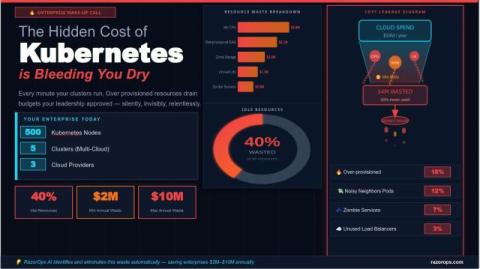
The Hidden Cost of Kubernetes: Why Your Cloud Bill Is 40% Higher Than It Should Be

The average enterprise running Kubernetes wastes between $2 million and $10 million annually — not from overspending, but from under-optimizing. This is the story of costs you can't see on your dashboard but that your CFO feels every quarter.