Broadcom's Rally Software Receives FedRAMP Authorization For Value Stream Management Solution
ValueOps Software FedRAMP Authorized, Furthering Company's Leadership Position.


The latest News and Information on DevOps, CI/CD, Automation and related technologies.
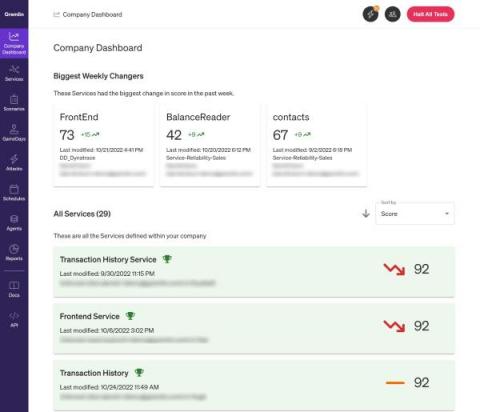
Part of a successful reliability program is being able to monitor and review your progress toward improving reliability. Being able to run tests on services is a big part of it, but how can you tell you're making progress if you can only see your latest test results? There should be a way to track improvements or regressions in your reliability testing practice across your organization in a way that's easy to digest. That's where the Reliability Dashboard comes in.
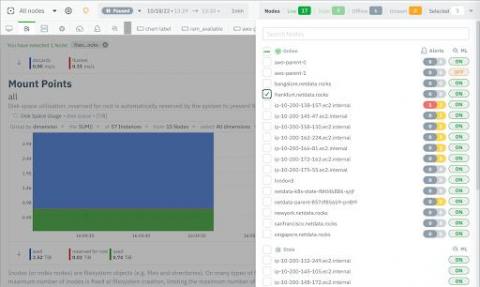
The most important part of disk usage monitoring is to check the utilization of each filesystem and each mount point which can reveal existing or impending issues with the storage space on your infrastructure.
Just consider how much of your day relies on online digital technologies. Perhaps you hopped on an app to pre-order your morning coffee and then logged onto a platform to book a car to work. Or, perhaps you stayed home to work, using digital tools to connect with your colleagues and exchange information.
Welcome to this three-part mini-series on bridging the gap between operational technology (OT) and information technology (IT) in Industry 4.0. Throughout this series, we will discuss the key challenges industrial manufacturers face when trying to accelerate their digital transformation. We will understand why legacy update approaches and lack of security in OT do not suit the Industry 4.0 world and assess how adopting open source software can help bridge the gap.
We are proud to introduce SUSE Edge 2.0, which will empower customers to accelerate and scale edge infrastructures and transform edge operations.
Playbooks aim to be a super-powered checklist for repetitive tasks. Before you can get to the “super-powered checklist,” though, you need to identify the process that you’ll use to build your first playbook and create a structured process as a Playbook checklist. Let’s go on that journey today.