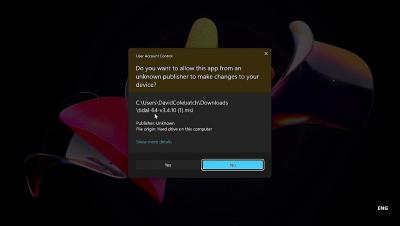
How To Install Tidal Tools on Windows and Linux
This video will show you how to install the Tidal Migrations CLI utility, Tidal Tools, on both Windows and Linux.


The latest News and Information on DevOps, CI/CD, Automation and related technologies.
Your new release tested fine on staging, but it’s not playing nicely with applications and services in the wild. Your monitoring application notices something going wrong and raises the alarm. But often raising the alarm isn’t enough – to solve complex issues, you might need to roll back to the last good deployment while you figure out the root cause and get multiple people working together on the solution.
Creating development environments on Kubernetes has been a topic discussed many times. As teams increase the number of developers using Kubernetes, it continues to be a challenge for many developers. This post aims to show how you can leverage Shipa to create environments and make them available to developers in just a few minutes!
As part of our mission to make it simple to secure software at scale through Continuous Packaging, Cloudsmith is excited to announce that we have become an Open Source Security Foundation (OpenSSF) member. OpenSSF is a cross-industry forum for a collaborative effort to improve security in open source software (OSS). One software pipeline's output is another's dependency- we are all splashing around in each other's supply chains.
Developers use JavaScript frameworks like Angular, React, and Vue.js to build every kind of single page application, from simple to complex. By separating JavaScript and CSS, frameworks let dev teams structure applications in modular chunks of code that carry out a single function. That is great, but once your application is ready for deployment to production, you will need a command to compile and bundle the separate files into a single one.
Mattermost v6.5 is generally available today and includes the following new features (see changelog for more details).
Put simply, cloud adjacent storage is just a privately owned and operated storage system, within network reach of a cloud provider’s region, but without the pay-as-you-grow and access charges found in public clouds.