It's Time We Throw Out the Usage of 'Postmortem'
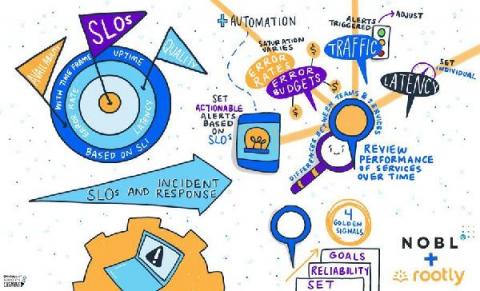
To put it bluntly, did someone die? In engineering, let’s hope your answer is a resounding no. So why do we continue to use the word ‘postmortem’?
The latest News and Information on DevOps, CI/CD, Automation and related technologies.
To put it bluntly, did someone die? In engineering, let’s hope your answer is a resounding no. So why do we continue to use the word ‘postmortem’?
YAML is a serialization language that was created in 2001, although it would take another few years before it became super popular. The acronym originally referred to Yet Another Markup Language but this was changed a few years later to YAML Ain’t Markup Language, to emphasize that developers should use it for storing data, instead of creating documents (like HTML or Markdown, for example).
Kubernetes applications are increasingly making their way to the edge and embedded computing. Storage will quickly follow as the applications that rely on this edge infrastructure become more advanced and naturally carry more state. According to a study by McKinsey and Company, a “connected car” processes up to 25GB of data per hour.
Within just five years, Kubernetes and containers have redefined how software is deployed. Researchers expect the container market to grow by 30% year over year to become a 5 billion industry by 2022. But what is the reason behind this mass adoption of container technology in the enterprise? Download whitepaper Containers are more resource efficient than virtual machines or other legacy app architectures.
If you strip the buzzwords and TLAs from the definition of DevOps? You’ll find that the roles and tasks involved aim mostly for more uptime and less downtime in the SDLC (software development lifecycle). The first step to achieving that is becoming aware of downtime as it happens with the help of monitoring solutions. Only then can you respond and resolve the issue in a timely manner that minimizes the dreaded and expensive downtime of software development teams.
Chaos Engineering is one of the hottest new approaches in DevOps. Netflix first pioneered it back in 2008, and since then it’s been adopted by thousands of companies, from the biggest names in tech to small software companies. In our age of highly distributed cloud-based systems, Chaos Engineering promotes resilient system architectures by applying scientific principles. In this article, I’ll explain exactly what Chaos Engineering is and how you can make it work for your team.
Hello, Puppet friends! It’s been a few months since we rolled out the latest major version of the Puppet platform, bumping PuppetDB, Puppet Server and Puppet Agent to “7.0.0.” First, we’d like to extend our gratitude to our vibrant Puppet community, who helped us immensely in locating and fixing some annoying bugs that managed to sneak through the release. We promptly provided follow-up releases, so be sure to check out the latest available versions for your operating system.