Operations | Monitoring | ITSM | DevOps | Cloud

The latest News and Information on DevOps, CI/CD, Automation and related technologies.

Replicate Artifactory Configuration with Terraform Provider Plugin

It takes a large team to manage enterprise DevOps, and it can take a large team of binary repository managers, too. It’s vital to get all team members going the same way, and quickly. A growing developer organization will have many instances of Artifactory to help them scale, on multiple nodes for high availability and multi-site repository replication. Configuring them all precisely, with the same set of repositories, users, and permissions, can’t be done effectively one at a time.
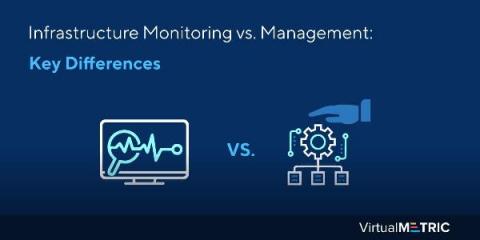
Infrastructure Monitoring vs. Management: Key Differences

Infrastructure monitoring is often equated to infrastructure management, which can blur the line between two very distinct jobs. While they are different, it’s safe to say that both infrastructure monitoring and management have the same end goals, i.e., to maintain the integrity of the network, secure the server, and optimize performance. Infrastructure management (IM) has many use cases, and one of those uses cases is infrastructure monitoring.

LogicTalks - How Logicalis Intelligently Monitors and Services it's Global Customer Base

In this episode of LogicTalks, Mark Banfield, Chief Revenue Officer at LogicMonitor, sits down with Justin Cawood, Director of International Managed Services Operations at Logicalis Group, to discuss how Logicalis, a managed services provider, has evolved the way they monitor their customer's infrastructures around the globe with LogicMonitor. Justin explains how LogicMonitor has allowed them to quickly discover and onboard new clients and infrastructures, consolidate tools and learnings across the global organization, and help Logicalis' customers to transition to cloud and hybrid environments and excel while working from home.

Shipping Terraform Logs with the Logz.io Provider & API

Logz.io has deepened its partnership with Hashicorp over the last few months. Recently, we announced our integration with their service mesh, Hashicorp Consul. Simultaneously, we have worked on and completed an integration with their infrastructure orchestrator (a.k.a, infrastructure-as-code or IAC), Terraform. IACs take manual configurations and treats them as, well, code (along with procedures, build guides, run books, etc.).

How to Reduce Your AWS Costs

Amazon Web Services (AWS) is a comprehensive cloud computing platform, providing an array of services to manage a business’s data infrastructure to help it grow and expand. With the wide range of services provided, it has multiple options to provide you with an elastic approach to optimize your costs. However, many users struggle with controlling their expenditure due to a variety of factors. Getting a complete understanding of how to reduce your AWS operational costs may be a daunting task.

Manage Splunk On-Call Using Terraform

HashiCorp’s Terraform has emerged as a powerful tool for managing infrastructure as code. Teams can fully describe an application’s infrastructure needs such as physical machines, VMs, containers and more using configuration files. This allows the application infrastructure to be version controlled, reducing human errors during deployments.

What You Need to Know About Serverless Security

Developers at Airbnb, BBC, Netflix, and Nike all share something in common: They’re using serverless computing to ship new products and features faster than ever. And they represent a growing trend. As businesses compete to quickly deliver customer value, a whopping 60% of enterprises have already adopted, or are planning to use, serverless architectures.

Managing Remote Teams: 3 Steps to Success

At times, directing projects in multiple locales from a desktop or laptop feels like conducting an orchestra in the dark. Coordinating with diverse, remote teams of developers producing software on an agile schedule of continual updates and releases can be especially nerve-wracking. At Sleuth, we’re crushing the remote-work challenge because, in 20 years of managing from afar, we’ve learned a thing or two — actually three — about how to do it right.