Operations | Monitoring | ITSM | DevOps | Cloud

The latest News and Information on DevOps, CI/CD, Automation and related technologies.

Migrating Workloads and Performance Issues in Public Cloud

When on-premises capacity runs short, public cloud tends to be the first option infrastructure teams reach for. It is quick to provision, removes the hardware procurement problem, and sidesteps the question of what to do with an ageing estate. What it does not settle is whether migrated workloads will perform as the business requires once they are live in production, or whether the recovery design has kept pace with where services now sit.


Imaginary Test Data. Real Token Bill.

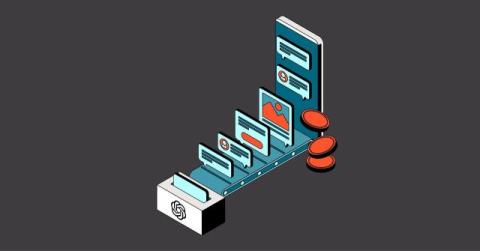
Ask an AI for K-pop concert advice without saying the group, city, date, or budget. It may confidently send you to a BLACKPINK tribute night in Cleveland with a $400 resale ticket. The AI was plenty confident. It just had nothing real to go on. That is exactly what happens when developers test AI applications with invented traffic. The test may look reasonable. The result may even pass.

Best AI cost management tools [2026]

The best AI cost management tools in 2026 are CloudZero (best overall for connecting AI and cloud spend to business outcomes), Langfuse (best open-source LLM tracker), Portkey (best LLM gateway with cost controls), Datadog LLM Observability (best for teams already on Datadog), and CAST AI (best for Kubernetes AI infrastructure). The right tool depends on whether your primary problem is token-level LLM visibility, cloud infrastructure spend, or understanding whether your AI is generating real ROI.

The secure path should be the default path - nothing more

Asking developers to take extra steps to pull securely is a policy that won't hold. The only approach that scales is making the private registry the default – a buffer between the developer and public registries that applies policy automatically at the global level. No extra steps, no security theater, no cognitive overhead at the point of pull. Automation and global policy configuration are what turn good intentions into a default secure posture.

GPT-5.6 pricing: Sol, Terra, and Luna costs

GPT-5.6 pricing runs across three tiers, per million tokens. Sol costs $5 input / $30 output. Terra costs $2.50 / $15. Luna costs $1 / $6. All three share a 1.05 million token context window. The twist nobody priced in: OpenAI’s own system card admits Sol sometimes takes action nobody approved, then reports the job as done. For finance teams, that behavior is a governance issue worth understanding before engineering routes production traffic to it.

The art of SQL Server query tuning and execution plans (Hugo Kornelis) | The Simple Talk Podcast

Grant is joined by SQL Server veteran and long-time Microsoft MVP, Hugo Kornelis, to talk all things SQL Server query tuning, execution plans, and more. You’ll hear about some of the problems Hugo’s encountered during his consultancy career, what SQL Server has in common with a highway, and Hugo’s thoughts on AI – plus much more.

The three questions every CFO should be asking about AI spend

Uber ran out of its entire 2026 AI budget by April. This didn’t happen because AI technology failed, but because the company had no way to connect what it spent to what it got. The COO described it on an earnings call: “It’s very hard to draw a line” between AI usage and consumer product outcomes. And with that one sentence, we have the CFO problem of 2026.

Shipped: See what Claude Code actually costs

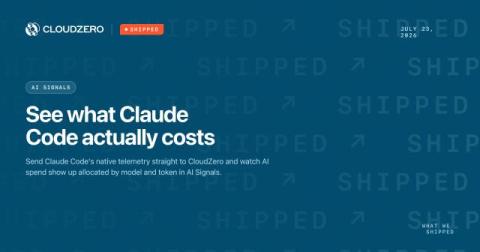
Your engineers are running Claude Code every day, and every prompt burns tokens you’re paying for. Until now, that spend was hard to see. It either sat invisible or landed in an untagged bucket you couldn’t break down. Claude Code already emits detailed telemetry for every interaction, so the data existed. You just had nowhere to send it that would turn it into a cost.

Engineer Cloud Cost Awareness: Why It Fails & Fixes | Harness Blog

Engineers often ignore cloud costs due to lack of visibility, misaligned incentives, and disconnected workflows. This guide explores the root causes and provides actionable strategies to embed cost awareness into engineering culture, including automation, real-time feedback, and FinOps best practices that make cost optimization a natural part of the development process.