Operations | Monitoring | ITSM | DevOps | Cloud

The latest News and Information on DevOps, CI/CD, Automation and related technologies.

The pipeline that never reached production | Harness Blog

Modern CI/CD platforms allow engineering teams to ship software faster than ever before. Pipelines complete in minutes. Deployments that once required carefully coordinated release windows now happen dozens of times per day. Platform engineering teams have succeeded in giving developers unprecedented autonomy, enabling them to build, test, and deploy their services with remarkable speed. Yet in highly regulated environments-especially in the financial services sector-speed alone cannot be the objective.

How to deploy PostgresSQL on Kubernetes

Kubernetes is a container orchestration platform that automates the deployment, scaling, and management of containerized applications, abstracting many of the manual steps of rolling upgrades and scaling. When building cloud-native applications in a Kubernetes environment, you’ll often need to deploy database applications like a PostgreSQL database so that your applications can leverage their features within the cluster.

Introducing Zero Trust Architecture for Software Delivery | Harness Blog

For the world’s largest financial institutions, places like Citi and National Australia Bank, shipping code fast is just part of the job. But at that scale, speed is nothing without a rock-solid security foundation. It’s the non-negotiable starting point for every release. Most Harness users believe they are fully covered by our fine-grained Role-Based Access Control (RBAC) and Open Policy Agent (OPA).

What is an EngOps platform? Key Features, Benefits, and Use Cases

Though AI tools have made individual developers dramatically more productive at writing code, most engineering organizations report moving only about 20% faster than before. As Honeycomb CTO Charity Majors recently wrote, "AI came for code generation first because it was the easiest problem to solve, but it was never the thing holding developers back.".

Your Most Expensive Kubernetes Costs Have Been Hiding In The Wrong Bucket

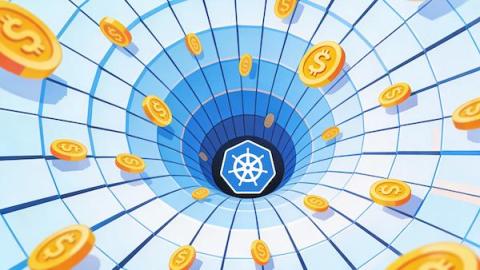
If your organization is running AI or machine learning workloads on Kubernetes, the bill is real. GPU instances are among the most expensive resources in cloud infrastructure, where a single high-end node can run $30 to $40 per hour, and a multi-day training job on a cluster can cost tens of thousands before anyone looks up from their terminal. What most engineering and FinOps teams haven’t been able to do (until now) is connect that spend to the workloads that caused it.

Ending the Chaos of CLI Version Drift: Introducing the JFrog CLI Control Manager

In a large-scale DevOps environment, small discrepancies lead to massive headaches. You’ve likely experienced it: a script runs perfectly on a developer’s laptop but fails in the production pipeline. You spend hours hunting for the cause, only to discover a mismatch in CLI versions. At JFrog, we know the JFrog CLI is vital to your automation, but managing it manually across thousands of users and pipelines is a hurdle that slows you down.

How Finance Leaders Can Use AI To Stay On Top Of Cloud Costs

There’s always been a bit of a communication breakdown between finance and engineering when it comes to cloud costs. Cloud costs are driven by technical factors expressed in esoteric terms, and so speaking the language of finance does not guarantee that you’ll speak the language of cloud cost. But AI is changing that. Fast. With the right AI tools, finance leaders can now ask natural-language questions about their cost data and get fast, accurate answers.

What fast debugging actually looks like on Upsun

Debugging a broken deployment can take hours, especially when the cause is unclear. Recently, a customer ran into this exact situation: their AI agent produced a Drupal site with broken composer scripts and mismatched database credentials, and nothing they tried got it running. This video shows how debugging works in practice on Upsun.