Operations | Monitoring | ITSM | DevOps | Cloud

The latest News and Information on DevOps, CI/CD, Automation and related technologies.

Shipped: Codex spend tied to the work behind it

People run Codex on their own laptops. When Codex is signed in with a ChatGPT subscription, OpenAI’s own admin console shows who used it and how much: messages and credits. What it doesn’t show is what any of that usage was for, or how it compares to what your team spent on other AI tools. The CloudZero desktop agent for macOS installs on a Mac, sees the traffic from AI coding tools, and prices what those tools use.

Why is AI so expensive? The real cost drivers of AI

AI is expensive because the model bill is only part of the cost. Three components set the floor: model subscriptions, per-token API pricing, and infrastructure. Three more make it move: adapting models to your business, catching and fixing errors, and rising energy and datacenter costs. Efficiency doesn't fix it, because cheaper AI gets used more, not less. Businesses are willing to spend on AI. Research from Deloitte found that in 2025, 85% of organizations increased their AI investments.

KPI cards: build a reliability dashboard that doesn't force tradeoffs

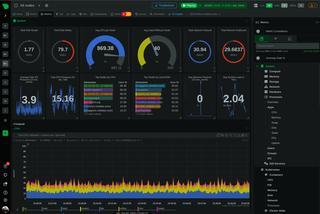
This week's Feature Friday: Principal Product Manager Christine Byun walks through KPI cards, a new way to build custom dashboards in Engineering Intelligence. KPI cards pull key metrics, like change failure rate and rollback frequency, into compact tiles so they stay visible without taking up chart space. That means the metric you're actively working, incidents, in this demo, gets full-size room, without losing sight of the rest of your system.

Kepler and Insights: Built From Opposite Directions

Most companies buy AI tools for developers and hope the impact shows up somewhere. A faster sprint. Fewer escaped bugs. Something. What they don’t have is a way to actually see it happening, which means adoption becomes a leap of faith instead of a measured bet. That’s the gap Kepler and GitKraken Insights close together, and it’s worth understanding as one story, not two separate product updates.

Synthetic Monitoring Is Broken. Your Production Traffic Can Fix It.

Synthetic monitoring has been a critical part of application reliability for years. It gives engineering and operations teams a way to proactively test applications, APIs, and critical customer journeys before users encounter problems. But there is a fundamental limitation with the traditional approach: Someone has to create the tests. As applications become more distributed and customer journeys become more complex, organizations can end up maintaining hundreds or even thousands of synthetic scripts.

Optimizing Kubernetes pod deployments for reliability with topology spread constraints

If you’re like many Kubernetes users, you don’t pay much attention to where or how Kubernetes distributes your pods. As long as they’re running, it doesn’t matter where they get deployed, right? Surely Kubernetes will use some complex algorithm to figure out the most reliable way to distribute your pods across the cluster…right? Pod distribution plays a much bigger role in reliability than you might think.

Shared context for AI coding agents beats better tooling

The instinct when adopting AI coding agents is to optimize the agent. Compare models, tune prompts, argue about which editor has the better completion, and treat the agent as the thing that determines how fast the team moves. Then the commits go up and the product does not. The team building Upsun Dispatch took a different route, and the result is worth copying. They did not find a better agent.