Operations | Monitoring | ITSM | DevOps | Cloud

The latest News and Information on DevOps, CI/CD, Automation and related technologies.
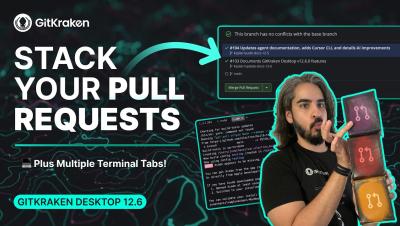
Shipping trustworthy code with Chunk CLI

AI coding agents are fast. They generate functions, refactor modules, and wire up boilerplate faster than any human. What they don’t do by default is enforce the conventions a specific team has agreed on: the lint rules, the review patterns that senior engineers flag on every PR. A generated diff looks clean until someone runs CI or reads it carefully.

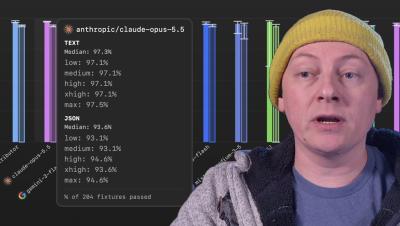
The Claude Bill is Too Damn High #speedscale #claude #aiagents #aicoding #devops #llms

Stop overpaying for AI reasoning by trading expensive GPU cycles for efficient, deterministic testing. This video explores how tools like linters and traffic replay can complement Claude, helping you fix bugs more accurately while cutting token usage by up to 50%. Visit: speedscale.com to learn more.

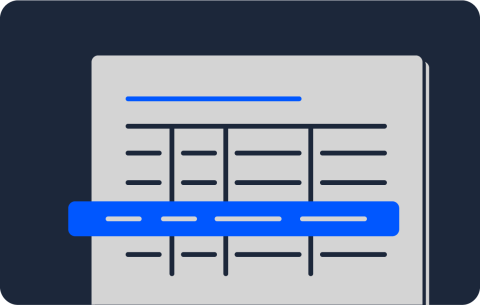
Database Performance Monitoring: Query-Level Visibility Across 14+ Databases

Netdata has always collected database metrics: connections, throughput, replication lag, buffer cache hit ratios, and so on. These tell you that something is wrong, but they don’t tell you why. When your PostgreSQL response time spikes, the metric alone doesn’t tell you which query is responsible. For that, you’ve traditionally needed to SSH into the box, connect to the database, and run diagnostic queries manually. Or set up a separate database monitoring tool entirely.

How is Agentic AI fundamentally different from earlier automation?

Autonomous operations has been the goal for years. But most “automation” never got us there—it just helped teams keep up. Now that’s changing. Agentic AI introduces a fundamentally different model:– Purpose-built agents, not static workflows– Real-time decisioning, not predefined rules– Collaboration across agents, not isolated tasks Instead of automating steps, agentic AI enables systems to **reason, adapt, and act**—at a speed and scale humans simply can’t match. That’s what turns autonomous operations from a long-standing ambition into something actually achievable.

Fixing Broken Traces in GCP Cloud Run: A Custom OpenTelemetry Propagator

GCP's load balancer silently rewrites your traceparent header, orphaning spans in any OTLP backend. Here's the custom propagator that fixes it. Prathamesh works as an evangelist at Last9, runs SRE stories - where SRE and DevOps folks share their stories, and maintains o11y.wiki - a glossary of all terms related to observability.

The Hidden Cost of DIY DevOps: Why Growing Companies Bring in the Experts

Companies are scaling faster than ever, but infrastructure rarely keeps up with the product. When developers take on operational work on top of everything else, it feels like a smart way to cut costs. In practice, it's one of the most expensive mistakes a growing software team can make. This article breaks down what DIY DevOps actually costs and how a structured approach changes the equation.

Run Local LLMs on Mac to Cut Claude Costs

Part of the motivation for this post is how cloud API economics are shifting: Anthropic is moving large enterprise customers toward per-token, usage-based billing (unbundled from flat seat fees), which makes “always call the API” a moving cost line for teams at scale. A hybrid or local layer is one way to keep spend bounded while you still use premium models where they matter.