Operations | Monitoring | ITSM | DevOps | Cloud

The latest News and Information on DevOps, CI/CD, Automation and related technologies.

Safer Kubernetes rollouts with minReadySeconds

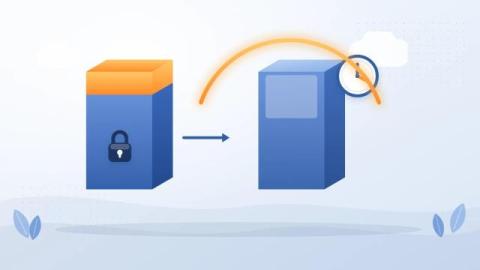
Picture the scene: you’ve just deployed a rolling update to your service. Half of your pods are running the new version, they all passed their readiness checks, and Kubernetes terminated the old replicas. Suddenly, the new pods start throwing 503 errors. Thankfully, you still have pods on the old version, so you stop the update. If the rollout had been a little bit faster, you’d have an outage. This is the failure mode minReadySeconds exists to prevent.

MCP vs API: How they work together and when to use each

Summary: An API defines how software interacts with a service. MCP defines a standard way for AI applications to discover and invoke tools exposed by a service. They usually work together: an MCP server can sit in front of APIs you already run, turning low-level operations into capabilities an agent can find and use at runtime. Your API may already expose everything an AI agent needs. The harder problem is helping the agent figure out which operations matter for the task it has been given.

Don't Break the Agent: Lessons in Token Optimization

This one is for the curious souls who wonder how somebody actually builds a harness optimizer — and, more to the point, how they know it works. When we launched JFrog Boost into public preview, we told the story of the bill that broke us and the 100 billion tokens we clawed back across JFrog R&D. What that post didn’t cover is the question that consumed most of our engineering time: how do you measure any of this?

From Telemetry to Traffic

A metric says latency increased. A log says a request failed. A trace identifies the slow dependency. An APM agent points to the method. Manual instrumentation explains the business operation. Traffic capture shows the exact request and response that triggered it. Each layer answers a question the previous layer could not. Each also introduces a new cost, blind spot, and failure mode.

Reliability Engineering in the AI Era

Engineering leaders have been claiming to “shift quality left” for years but production remains stubbornly stuck out of reach of software engineers. The realm of production remains mysterious with tools no one has access to and UIs that wouldn’t make sense to engineers anyway. I’ve noticed a small but growing trend of large enterprises hiring Reliability Engineers instead of Site Reliability Engineers. Dropping one word looks cosmetic but I think it points to a much bigger change.

AI Agents Need Guardrails: Building Autonomous IT with Resolve Agent Lab | Agents of IT

AI agents are moving fast. For enterprises, the bigger question is how to make them useful, trusted, and safe enough to take action. In this episode of Agents of IT, Zach Austin and Ian Coppock unpack what it takes to move from experimenting with AI to operationalizing agentic AI across the enterprise. They explore why organizations are racing to deploy AI before defining the problems they want to solve, why governance and scoped responsibilities are critical, and why the real value of AI comes from fixing and orchestrating the workflows underneath it.

From vibe coder to enterprise: How Konstruct scales with you

Platform teams spend 6–12 months building the thing Konstruct gives you on day one. Secrets, certs, DNS, cluster provisioning, then doing it all again for the next team, the next cloud. Konstruct is one control plane that scales from a solo builder to a hundred-person platform org, without you ever re-architecting. Climb the responsibility ladder on your terms, hosted app, hosted cluster, hosted control plane, fully self-hosted. You decide where the line sits.

You Vibe Coded an App...Now What?

"Hey, I built this over the weekend. I want to get it in front of customers." And it always hits architecture, security, and infrastructure. Ross Hendrickson, CTO at Inspectiv, calls that gap the chasm. His team crosses it on Control Plane: AI-written code secured, reviewed, and released in a day. Control Plane combines AWS, GCP, Azure and your own hardware into one virtual cloud shaped to your workloads.

Token budgets: capping AI agent and LLM spend

AI costs are changing. As noted by research from EY, outputs that cost just $0.04 in 2023 now cost $1.20, a 30x increase over just three years. It’s worth noting that task operations and complexity have also changed. In 2023, the process was simple. Users input a question, retrieval engines found relevant data, and AI models returned a response. Today, many tasks are handled by orchestrated AI agents capable of much more complex reasoning and analysis.

Shipped: A changelog that keeps up with how fast we ship

When the changelog doesn’t keep pace with the product, two things can happen. One, you keep working around something that was already fixed weeks ago. Or two, a behavior changes, you assume it’s a bug, and you spend an afternoon on triage and a support ticket before learning it was an intentional improvement. CloudZero now ships around 30 improvements a week, a pace driven by the Next Gen Platform and the AI-first approach we’re building for our customers.