Operations | Monitoring | ITSM | DevOps | Cloud

The latest News and Information on DevOps, CI/CD, Automation and related technologies.

What Is Database Software? Types, Examples, and dbForge Edge Explained

Database software helps organize, manage, retrieve, and analyze data in databases. But what does that actually mean in practice? In this video, we explain what database software is using a simple library analogy, show how it helps add, edit, delete, and report on data, and break down the main types of database tools used by developers, DBAs, analysts, and technical teams. You will also see examples of well-known database software, including SSMS, MySQL Workbench, pgAdmin, Oracle SQL Developer, JetBrains DataGrip, DBeaver, and dbForge Edge.

Chunk sidecars: Inner Loop Validation for AI Coding Agents

Your agent writes code fast, but you shouldn't have to see it until it's right. Chunk sidecars are lightweight microVMs that work inside the agent loop, requiring agents to pass pre-push validation in a CI-like environment before they declare they're "done." That means no massive CI pile-ups, no long round-trips that risk resetting your agent's context. You're sending code you already know is good.

So you need to add microcontrollers to your fleet: now what?

Your Ubuntu Core fleet is running beautifully. OTA updates roll out in minutes. Every device is strictly confined, cryptographically attested, and carrying a 10 to 15 year long term support (LTS) commitment. The operational team sleeps soundly. Then the product roadmap meeting happens. The industrial floor needs vibration sensors on every motor. The smart building needs temperature nodes in every room. The cold chain system requires dozens of low-power Bluetooth tags. And someone just said the words.

Only ONE company has all of DevSecOps - and it's not who you think

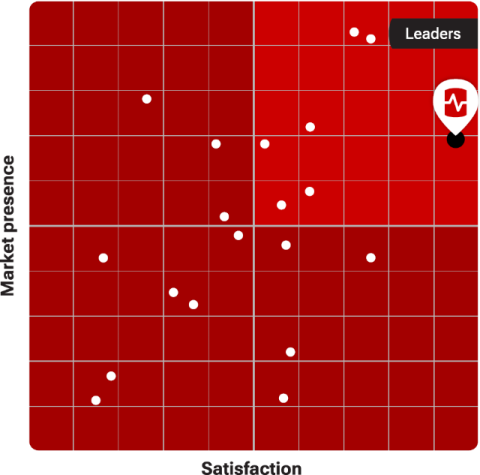
Harness has been named a Leader in the 2026 Gartner Magic Quadrant for DevSecOps Platforms — for the third year in a row. Here's what stands out: almost every company in the Leaders quadrant is missing a piece. Some have Dev, some have Ops, but not the security. Harness is the one platform that brings Dev, Sec, AND Ops together — with AI built in. AI is changing how software gets built: more code, more automation, more agents — but also more complexity. Teams need delivery, security, testing, reliability, and cost in one place. That's what we're building every day.

How to build a secure AI agent sandbox with relaxAI and Claude Code

AI agents are powerful. They're also unpredictable, non-deterministic, and capable of doing things you didn't ask them to do, as the Rome Alibaba and Claude Mythos case studies make very clear. The answer isn't to avoid agentic AI. It's to run it properly. In this demo, Ben Norris, founding engineer at relaxAI, shows how to build a fully sandboxed AI agent environment from scratch, an ephemeral Civo VM provisioned via Terraform and GitHub Actions, locked down with egress policies, an unprivileged Linux user, and hard resource caps, running a Claude Code session pointed at the relaxAI API.

How to run an operational excellence review for software engineering

Most engineering organizations already run something they call an operational review. It usually looks like a cousin of the quarterly business review: a deck assembled every few months, walked through team by team, anchored on whatever incidents happened to land in the previous quarter. By the time leadership sees the data, the systems it describes have moved on and the next set of risks is already accumulating in the gap.

7 Best AI Search Tools Across Slack, Google Drive, and GitHub That Flag Stale Docs

An authoritative-looking snippet can be poisonous if it's two versions behind. A Gartner CX survey found that 56 percent of users complain about outdated documentation, and a 2026 Support Ops study attributes nearly 40 percent of tickets to articles that are stale or unclear. If a deployment script changes yet the old README still ranks first in Slack, you can lose an afternoon chasing errors. Multiply that across every lapsed policy, pricing deck, or support macro, and productivity shrinks-along with audit scores and customer trust.

Scaling Android development with Anbox Cloud

Discover how Anbox Cloud helps engineering teams scale Android development by moving Android workloads from physical hardware into the cloud. In this video, we showcase how developers can run, test, validate, and share Android environments on demand using containerized and virtualized Android instances. We explore how both approaches work, key differences, and use cases.