Operations | Monitoring | ITSM | DevOps | Cloud

The latest News and Information on DevOps, CI/CD, Automation and related technologies.

Claude Opus 4.7 Pricing In 2026: What It Actually Costs (And Whether It's Worth It)

Claude Opus 4.7 holds at $5/$25 per million tokens — but a new tokenizer inflates costs up to 35% on identical text. Here's what Opus 4.7 actually costs at production scale, how it compares to Sonnet 4.6, and the six levers that determine where your bill lands.

Identify and fix code issues faster with Datadog's Azure DevOps Source Code integration

Developers and SREs who rely on Microsoft Azure DevOps often face fragmented workflows when investigating issues or reviewing code quality. Troubleshooting an error can require jumping between observability tools and source code repositories as you manually connect traces, stack frames, and commits. At the same time, security vulnerabilities, misconfigurations, and flaky tests may go undetected until later stages of the software delivery life cycle (SDLC), where they are more costly to fix.

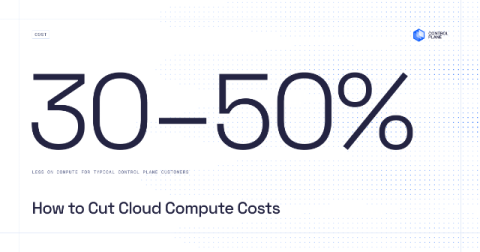
How to automate environment sleeping and stop paying for idle Kubernetes resources

Scaling your deployments to zero is only half the battle. If your cluster autoscaler does not aggressively bin-pack and terminate the underlying worker nodes, you are still paying for idle metal. True environment sleeping requires tight integration between your ingress layer and your node provisioner to actually realize FinOps savings.

Beyond the frontend: choosing between Vercel and Upsun for full-stack applications in 2026

If you're building a modern web application in 2026, Vercel is almost certainly on your shortlist, and probably near the top of it. The developer experience Vercel pioneered for Next.js and the frontend ecosystem around it is a real achievement. Push a branch, get a preview URL, ship. It works, it's fast, and an entire generation of frontend teams have built their workflow around it. This article is not here to argue with any of that.

From Deployment to Confidence: Why Continuous Verification Is the Missing Piece in Modern CD Pipelines | Harness Blog

Modern engineering teams have become exceptionally good at shipping software quickly. With modern CI/CD platforms, what once required careful coordination, late-night release windows, and layers of approvals now happens almost invisibly. Pipelines execute in minutes. Releases flow continuously. The friction that once slowed everything down has been engineered away. From the outside, it looks like progress in its purest form. Automation removed bottlenecks. Cloud infrastructure removed limits.

Building for the Agentic Era: Engineering Excellence at Harness | Harness Blog

As AI agents become ubiquitous across the software development lifecycle, engineering teams must do more than adopt new tools; they must redesign how they build, verify, and operate software. This post distills the vision, priorities, and best practices that guide engineering excellence at Harness. Different products sit at the heart of the Harness platform.

What is Terragrunt and how does it simplify Terraform Workflows? | Harness Blog

Managing Terraform across dozens of AWS accounts becomes a maintenance nightmare fast. Teams end up copy-pasting the same backend configurations, provider blocks, and variable definitions hundreds of times. Terragrunt acts as an orchestrator above Terraform, eliminating this duplication through shared configuration inheritance and dependency management. When financial services teams manage 200+ microservices across multiple environments, these DRY patterns become essential for governance and consistency.

What EMEA Infrastructure Leaders Are Saying About Security, Compliance, & Hybrid IT

Over the past few months, Puppet has partnered with Bryxx to host a series of leadership lunches across Europe, bringing together infrastructure, operations, and security leaders for candid, peer‑to‑peer conversations. These sessions weren’t marketing briefings. They were grounded discussions about what teams are facing right now: tighter regulation, rising security pressure, shifting cloud strategies, and the practical realities of automation and AI.

Chaos Engineering vs. Traditional Testing: What's the Difference? | Resilience Testing | Harness

Stop treating system outages like surprises and start preparing for them. While traditional software testing is the bedrock of development, using unit, integration, and regression tests to verify that code meets specific requirements, it only accounts for what we expect to happen. Chaos Engineering takes a different approach by shifting the focus from bug prevention to system resilience. Instead of asking "does this work?", Chaos Engineering asks "how does this survive?" by injecting real-world turbulence like network latency or pod failures directly into production-like environments.

RTO and RPO in Disaster Recovery Explained | Resilience Testing | Harness

Struggling with disaster recovery planning? Learn the simple difference between RTO and RPO, the two most important metrics every developer, DevOps engineer, and SRE must understand. RTO (Recovery Time Objective) tells you exactly how long your systems can stay down before it hurts your business. RPO (Recovery Point Objective) shows how much recent data you can afford to lose in an outage.