Better alignment with OpenTelemetry by focusing on OTLP
TL;DR: proposal (and a survey) to deprecate native Jaeger exporters in OpenTelemetry SDKs in favor of OTLP exporters.


TL;DR: proposal (and a survey) to deprecate native Jaeger exporters in OpenTelemetry SDKs in favor of OTLP exporters.
Your release management process is one of the most critical processes in your organization’s toolkit. An excellent release management process can accelerate software release workflows, allowing your team to deliver software consistently and predictably and ensuring that your customers have an optimal brand experience. But release processes can have weaknesses that slow your team down and can even introduce risk to every release.
This year’s Experience Everywhere is in the books – and just as we expected, the New York crowd helped us end this unforgettable four-city tour on a high note. We knew we had to bring something special for our big return to a live conference, and our incredible attendees and a star-studded lineup of speakers helped us do just that.
At ObservabilityCON, we announced our first step towards launching a native integration between Grafana k6 load testing and Grafana Tempo tracing (k6 x Tempo) in Grafana Cloud. We created k6 x Tempo to help dev, testing, and operation teams analyze their performance test results more effectively and proactively improve the reliability of their business-critical applications.
Google Kubernetes Engine (GKE) is a managed Kubernetes service that enables users to deploy and orchestrate containerized applications on Google’s infrastructure. Datadog’s GKE integration, when paired with our Kubernetes integration, has always provided deep visibility into the health and performance of your clusters at the node, pod, container, and application levels.
Have you been meaning to learn about OpenTelemetry and the integration of all available application and service telemetry? If you like to learn things by doing; get ready to dive in and have some fun with OpenTelemetry and Splunk Observability Cloud. Quickly learn more about OpenTelemetry auto-instrumentation and collectors at your own pace with these walkthroughs and guides.
Artificial intelligence for IT operations (AIOps) is an umbrella term for the use of big data analytics, machine learning (ML) and other artificial intelligence (AI) technologies to automate the identification and resolution of common IT issues. The systems, services and applications in a large enterprise produce immense volumes of log and performance data. AIOps uses this data to monitor assets and gain visibility into dependencies within and outside of IT systems.
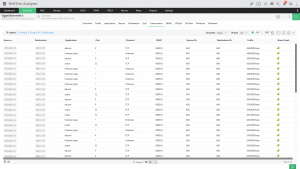
Handling today’s network performance challenges is imperative. Especially when there’s no specific tool for proactive monitoring, results from a root cause analysis are often incomplete. Organizations that don’t review metrics related to performance and availability risk compromising their network.
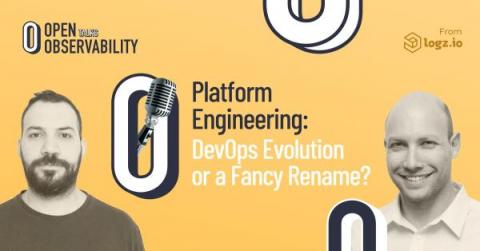
Everyone’s talking about Platform Engineering these days. Even Gartner recently featured it in its Hype Cycle for Software Engineering 2022. But what is Platform Engineering really about? Is it the next stage in the evolution of DevOps? Is it just a fancy rebrand for DevOps or SRE? As a veteran of the PaaS (Platform as a Service) discipline about a decade ago, and a DevOps enthusiast at present, I decided to delve into this topic, peel off the hype, and see what it’s about in practice.