Operations | Monitoring | ITSM | DevOps | Cloud

ObservabilityCON Day 3 recap: What's new in Loki 2.0, tracing made easy with Tempo, observability at the Financial Times, and a Minecraft NOC

Today is the last day of ObservabilityCON 2020! We hope you’ve had the chance to catch the talks so far, and will tune in live for today’s sessions. View the full schedule on the event page, and for additional information on viewing, participate in Q&As, and more, check out our quick guide to getting the most out of ObservabilityCON. If you aren’t up-to-date on the presentations so far, here’s a recap of day three of the conference.
Migrating to TimescaleDB

Here at MetricFire we’re moving some huge rocks to get more benefits for our customers. Our tech team is migrating our Graphite backend from a Riak database to TimescaleDB. This will drive huge benefits for our customers stemming from the new ability to access their database through PostgreSQL querying. Simultaneously, we’ll be migrating our cloud provider from Hetzner to AWS. This drives further benefits surrounding latency, uptime and security requirements for our customers.

Azure Lighthouse jumpstart

We are delighted to have a guest blog from Microsoft MVP Martin Ehrnst! Read on for Martin's expert advice on how best to use Azure Lighthouse. Afterwards, head over here to see how you can get a true single pane of glass for all your Azure tenants using SquaredUp's new Lighthouse features. Azure Lighthouse provides a unified management experience across all your customers (and internal) Azure resources. Depending on your background, you might not know why this is so big.

Solving critical Windows services restart during Puppet agent upgrades

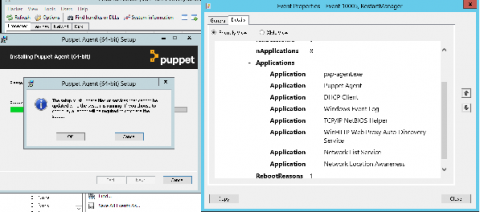
In this blog we’ll share the journey we went on to solve a not-so-easy customer problem: a critical Windows services restart during Puppet agent upgrades. As with most software fixes, it starts with a customer ticket: component DHCP Server service restarts after an upgrade. This troubleshooting journey goes from analyzing Windows installer logs, to using undocumented Windows API calls, and back to the Windows installer logs, until we eventually found a solution.

Implementing GitOps on Kubernetes Using K3s, Rancher, Vault and ArgoCD

As Kubernetes continues to establish itself as the industry standard for container orchestration, finding effective ways to use a declarative model for your applications and tools is critical to success. In this blog, we’ll set up a K3s Kubernetes cluster in AWS, then implement secure GitOps using ArgoCD and Vault. Check out the source for the infrastructure and the Kubernetes umbrella application here.

Active Directory Monitoring Essential Guide

An effective active directory monitoring system is essential to a secure directory design. There is a wide variety of security issues and loopholes that can be identified early if the users on the network are following the active directory monitoring guidelines. The lack of such monitoring can lead to a multitude of security threats which can result in financial and reputational damage along with data loss.

5 Service Desk Tickets Sure to Keep You Awake at Night

It’s the witching hour and the night is cold. Something feels eerie—it seems calm, but you’re not sold. You turn your computer on and to your despair, Through the garishness of the screen It was sitting there. That service desk ticket. The one you thought was finally resolved But it’s back, and with a vengeance Ready to wreak havoc on all involved. This is just the beginning of your nightmare And the scariest part, you haven’t even read.

The Future of Ops Careers

Have you seen Lambda: A Serverless Musical? If not, you really have to. I love Hamilton, I love serverless, and I’m not trying to be a crank or a killjoy or police people’s language. BUT, unfortunately, the chorus chose to double-down on one of the stupidest and most dangerous tendencies the serverless movement has had from day one: misunderstanding and trash-talking operations.