Mattermost v7.4 is now available
Mattermost v7.4 is generally available today. The following new features are included (see changelog for more details).


Mattermost v7.4 is generally available today. The following new features are included (see changelog for more details).
Containers and microservices have revolutionized the way applications are deployed on the cloud. Since its launch in 2014, Kubernetes has become a standard tool for container orchestration. It provides a set of primitives to run resilient, distributed applications. One of the key difficulties that developers face is being able to focus more on the details of the code than the infrastructure for it. The serverless approach to computing can be an effective way to solve this problem.
Logs are a critical aspect of any production workload, as they give you insight into what is happening in your system and tell you which components may be having issues. The traditional method of looking at logs involves basic Linux commands like tail, less, or sometimes cat.
Picking the best iOS crash reporting tools available in 2023 is a tall order. The market has continued to get more competitive, and a best-in-breed tool needs to monitor crashes, generate crash reports, filter and group errors, plus perform other tasks on top. In this article, we’ve collected the 15 best iOS crash reporting tools to help you make the right decision for your particular requirements.
Network infrastructure monitoring is a crucial part of modern IT business. You need a flawlessly functioning network to deliver services and products to the end users. As the size and complexity of a network grows, so do the stakes. Any issue in a large enough network will cause multiple repercussions, and network administrators fight an uphill battle trying to troubleshoot them. With the right sort of monitoring tool, you can ensure a better experience for both the users and the admins.
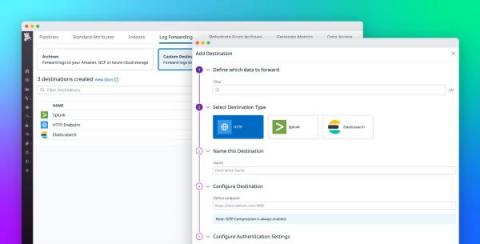
Large organizations often rely on multiple monitoring tools, security platforms, and auditing systems to meet the diverse needs of their observability, security, engineering, and compliance teams. Because these teams may use the same logs for many different use cases—including detecting potential threats or breaches, troubleshooting errors, and gauging the effectiveness of new features—it can be difficult to effectively standardize and route data.
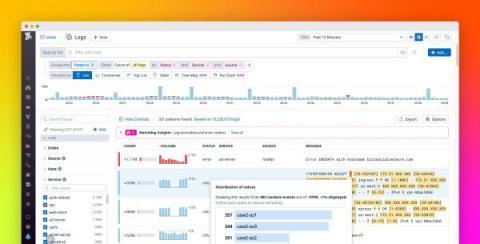
Whether you’re rushing to troubleshoot an incident or proactively performing a security audit, the trial-and-error process of searching through millions of logs for key information can be time-consuming and cumbersome. To help you quickly surface important details from large swaths of log data, Datadog’s Log Explorer allows you to search and filter your logs, create visualizations, as well as group your logs by fields, patterns, or transactions.