Operations | Monitoring | ITSM | DevOps | Cloud

Sponsored Post

Infrastructure monitoring using kube-prometheus operator

Prometheus has emerged as the de-facto open source standard for monitoring Kubernetes implementations. In this tutorial, Kristijan Mitevski shows how infrastructure monitoring can be done using kube-prometheus operator. The blog also covers how the Prometheus Alertmanager cluster can be used to route alerts to Slack using webhooks. In this tutorial by Squadcast, you will learn how to install and configure infrastructure monitoring for your Kubernetes cluster using the kube-prometheus operator, displaying metrics with Grafana, and configuring alerting with Alertmanager.

Machine learning model can distinguish antibody targets

A new study shows that it is possible to use the genetic sequences of a person’s antibodies to predict what pathogens those antibodies will target. Reported in the journal Immunity, the new approach successfully differentiates between antibodies against influenza and those attacking SARS-CoV-2, the virus that causes COVID-19.

Using Containers for Microservices: Benefits and Challenges for your Organization

Using containers for microservices has gained a lot of popularity in the last decade or so. Developing the application through microservices across multiple containers results in the best of both worlds. It provides resilience as well as agility through scaling and improvements. Before we dwell on how containers and microservices form an ideal combination, let’s start with a basic understanding of microservices and containers.

Moving Beyond Troubleshooting, IT Reports Best Practices

It is widely accepted that technology is critical to modern businesses, but it’s often challenging to show the value Information Technology (IT) delivers to the entire organization. As a result, IT is still often viewed as a matter of “troubleshooting” or “customer support” rather than a genuinely strategic component of the organization.

You need these 5 features in your ITSM chatbot

With advances in AI, the obvious discussion arises, how to make work-life easier? How to minimize time spent on mundane tasks? How to save time and money while ensuring that your IT team is functioning as efficiently as possible? Now enter… the chatbot. The virtual assistant or the chatbot is a significant AI-powered development with various use cases. It is an integral part of self-service today. In fact, you can even say that the chatbot has re-defined self-service.

Digital transformation and use cases in logistics

Customer-first culture is a driving force for any organisation’s success in logistics. Having a customer-first mindset means constantly thinking about your customer and your customers’ customers — and all of their employees. To have a good relationship with the customers, listening and understanding them is the key.

Debugging the Java Message Service (JMS) API using Lightrun

The Java Message Service API (JMS) was developed by Sun Microsystems in the days of Java EE. The JMS API provides us with simple messaging abstractions including Message Producer, Message Consumer, etc. Messaging APIs let us place a message on a “queue” and consume messages placed into said queue. This is immensely useful for high throughput systems – instead of wasting user time by performing a slow operation in real-time, an enterprise application can send a message.

How to Monitor Website Performance

Most organizations today have a large digital presence, and some rely significantly on their web applications to provide value to their customers and generate income. Keeping your website up and running 24/7 isn't enough in today's digital world. To provide a better experience, you should optimize your web pages frequently. Slow-loading pages or those that aren't mobile-friendly might cause an increase in bounce rate as well as influence your search engine rankings.

Build custom API integrations with incident.io

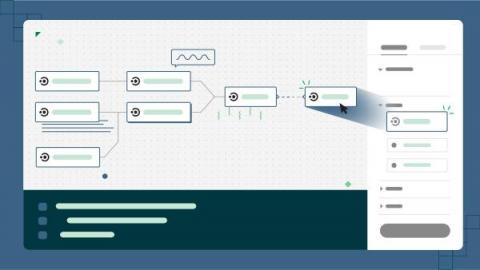
We’re building incident.io as the single place you turn to when things go wrong. When an issue is disrupting your business-as-usual, the last thing you want is to start opening ten different tools to diagnose and fix it! As your central incident hub, we need to give you two powers: Workflows cover the former. Workflows are like a mini incident.io Zapier.